








How to Buy Backlinks the Right Way?


Explore this post with:
Yes, you can buy backlinks safely. But only if you do it the right way. You should buy from trusted sources like:
- Guest posts
- Niche edits
- Digital PR
Buying cheap bulk links from spammy networks gets you penalized.
This question splits the SEO world. Some call it too risky. Others call it the fastest way to grow rankings. The truth sits in the middle.
Google does not approve of paid links, yet most professionals still use them. A survey found that 74.3% of SEO professionals admit to buying backlinks. That number tells you how normal this practice has become.
The US market makes this even more competitive. American businesses in the finance, SaaS, and legal niches spend thousands of dollars monthly on links. AI search has raised the stakes further. Platforms like ChatGPT and Google AI Overviews now pull from sites with strong editorial backlinks and brand authority.
This guide covers the exact steps to buy backlinks safely, along with many other topics..
What Does Buying Backlinks Mean?
Buying backlinks means paying a website to place your link inside their content. In an ideal world, backlinks are earned. They are not bought. A site links to you because your content helps their readers.
Here is how natural backlinks work. You publish a strong research study or a helpful guide. Other sites cite it without you asking or paying. That was Google’s original vision for backlinks as a ranking signal.
But things changed. Many website owners now treat backlinks as a revenue stream. Instead of linking for free, they charge to include your link in their articles.
Modern link buying takes several forms, and not all carry the same value:
- Guest post backlinks: You write an article for a publisher with your link inside it
- Niche edits: Your link gets inserted into an existing, already-indexed article
- Editorial backlinks: Links placed naturally within relevant editorial content
- Digital PR mentions: Backlinks earned from news outlets through newsworthy content
For example, a travel blogger charges $150 to add your hotel link to their “Top 10 Places to Stay” article. This is sponsored content, one of the most common forms of link buying today.
What Is Google’s Take on Buying Backlinks?
Google’s position is clear. According to Google Search Central, buying links that pass ranking credit violates their spam policies. Google treats this as a “link scheme.”
If Google decides your backlinks are unnatural, three things can happen:
- Your links get treated as worthless with zero SEO benefit
- Your site receives a penalty that lowers visibility
- In extreme cases, your site disappears from search results entirely
However, enforcement is not black and white. In practice, Google’s algorithm quietly devalues paid links. Google’s March 2026 link spam update focused mostly on large-scale link schemes and private blog networks.
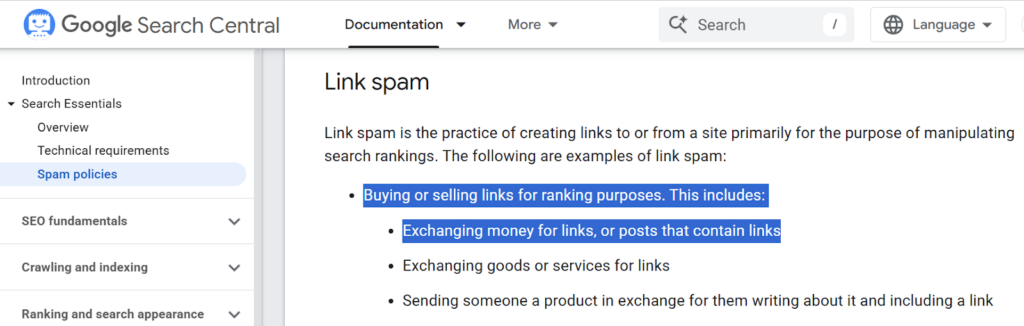
There is also a compliant way to handle paid links. Google asks you to mark sponsored links with a rel=”sponsored” or rel=”nofollow” attribute. These links do not pass ranking value, but they keep you within Google’s guidelines.
This is why many SEOs argue that buying niche relevant backlinks still works. As long as the links sit on quality sites and look editorial, the risk stays low.
Should You Really Buy Backlinks?
It depends entirely on how you do it. Done carelessly, you waste money and risk penalties. Done strategically, you strengthen your link profile and rankings.
When Buying Backlinks Makes Sense
Buying makes sense when you need speed and you have vetted every placement. It works when you target niche-relevant, high-traffic sites with real editorial standards. It fits well inside a larger strategy that also includes organic outreach.
When Buying Backlinks Is Risky
The risk spikes when you chase cheap bulk offers. Buying 100 links for $50 almost always means PBNs or automated link drops. These create a toxic profile that Google flags during algorithm updates.
Industries Where Backlinks Matter Most
Some industries simply cannot compete without aggressive link building:
- SaaS: Crowded keywords mean authority backlinks often decide who ranks
- Law firms: Local and national legal terms are fiercely competitive
- Finance: YMYL niches demand strong trust and authority signals
- E-commerce: Product and category pages rarely earn links naturally
Why Do SEO Professionals Buy Backlinks?
Building backlinks naturally takes time and constant outreach. Even then, sites may ignore you. That is why so many professionals choose to buy quality backlinks instead.
To rank faster
Google still relies heavily on backlinks. More quality links usually mean higher rankings, and faster results than waiting for organic mentions.
To compete in tough niches
In finance and SaaS, everyone buys links. Smaller sites have little choice but to keep pace with premium placements.
To improve AI search visibility
This is new and important. 73.2% of marketers believe backlinks influence whether a site appears in AI search results like ChatGPT and Google AI Overviews.
To build brand authority
Links from respected publications position your brand as a credible name in your space. That trust carries into both search and AI platforms.
To increase topical authority
A cluster of niche relevant backlinks tells Google your site is an authority on a specific subject. This strengthens rankings across related keywords.
To gain referral traffic
A link on a high-traffic blog sends real visitors, not just ranking signals.
How Much Do Backlinks Cost in 2025?
Backlink pricing in 2026 ranges from $83 for basic placements to over $500 for high-authority links. The exact cost depends on:
- The site’s authority
- Niche competitiveness
- Whether content is included
The average paid link costs $83. But that figure covers lower-tier placements on smaller blogs. If you want to buy high DA backlinks from trusted sites, the price climbs sharply. The 2025 State of Link Building report by Editorial Link puts the average high-quality link at $508.95.
US Backlink Pricing Benchmarks
| Link Type | Typical US Price Range |
| Entry-level guest posts | $100 to $250 |
| Mid-tier guest post backlinks | $250 to $450 |
| High DA backlinks (DR 70+) | $500 to $1,000+ |
| Niche edits | $80 to $350 |
| Digital PR placements | $1,000 to $5,000+ |
| Enterprise link building (monthly) | $5,000 to $20,000+ |
Costs keep rising too. According to Ahrefs data, the average cost per link increases 15 to 20% annually. Links from DR 70+ websites cost 5 to 8 times more than links from DR 30-40 sites. SEO agencies typically charge $150 to $500 per link for managed campaigns including content.
Expert Insight: Most experienced SEO professionals prioritize relevance and organic traffic over DR metrics alone. A DR 40 site in your exact niche often outperforms a DR 70 general site. Vanity metrics look good in reports but do not always move rankings.
The Benefits of Buying Backlinks
Done right, buying backlinks delivers real advantages. That is why professionals keep paying for links despite Google’s warnings.
Faster ranking growth
High-quality backlinks are among Google’s strongest signals. Buying from trusted sites helps pages climb faster than organic outreach alone.
Access to high DA sites
Earning links from authority sites through free outreach takes months. Buying gets you those placements quickly and strengthens your profile.
Faster indexation
Links from frequently-crawled authority sites help Google discover your pages sooner. A backlink on an active, high-traffic site speeds up indexing naturally.
Better AI search citations
Strong editorial backlinks build the authority signals that AI platforms scan when choosing which brands to cite in generated answers.
Improved topical authority
A focused set of relevant links signals deep expertise in your subject. This lifts rankings across an entire keyword cluster, not just one page.
More referral traffic
A link on a popular blog drives direct visitors and new customers alongside better rankings.
52.3% of digital marketers consider link building the hardest part of SEO. Buying removes much of that difficulty.
Risks of Buying Backlinks
Buying backlinks carries serious risks when you choose the wrong approach. Here is what to watch for.
Google penalties and manual actions
Paid links that pass ranking credit count as link schemes. If a human reviewer at Google issues a manual action, your rankings can collapse overnight.
Link spam update risks
Google’s algorithm updates specifically target unnatural link patterns. Sites that bought low-quality links in bulk often lose rankings when these updates roll out.
Wasted money on dead links
Buying from spammy directories and forums produces links Google ignores. You spend money and gain nothing.
Low-quality vendor risks
Cheap providers rely on PBNs and automated link blasts. These may work briefly, then trigger penalties during the next update.
Brand damage
A link on a thin-content, spam-filled site weakens your trust signals. It makes your brand look less credible to both users and Google.
According to industry data, 89% of SEOs say spammy outbound links are the biggest red flag when evaluating a site for placement.
How to Evaluate a Backlink Before Buying
Before you spend a dollar, evaluate every backlink against six factors. This is how you separate high quality backlinks from money-wasting placements.
Check Organic Traffic
Organic traffic is the single most important signal. A site with real monthly visitors passes genuine authority. Use Ahrefs or Semrush to confirm the site gets consistent traffic from Google. A high DA site with zero traffic is usually a PBN or expired domain.
Check Topic Relevance
Relevance beats raw metrics in 2026. A backlink from a site in your exact niche carries far more weight. A fitness brand should target fitness and health publishers, not random lifestyle blogs.
Check Domain Authority
DA and DR give you a rough sense of strength. But never rely on them alone. These third-party metrics can be manipulated. Treat them as one input among several, not the deciding factor.
Check Outbound Links
Scan the site’s outbound link profile. If a site publishes dozens of sponsored posts daily with links to unrelated niches, walk away. Heavy outbound linking signals a link farm.
Check Spam Signals
Look for thin content, excessive ads, and irrelevant topics. A clean site with original content and real engagement is safe. A cluttered site full of spun articles is not.
Check AI Search Visibility
This is the modern addition. Sites that already get cited in AI Overviews and ChatGPT carry strong entity signals. A backlink from such a site supports your own AI search presence.
Where Can You Buy Backlinks Safely?
The safest places to buy backlinks are established link building agencies, vetted guest post marketplaces, and digital PR services. Each option suits a different budget and goal.
Link Building Agencies
Agencies handle everything from strategy to placement. You get a full team, established publisher relationships, and managed campaigns. The trade-off is higher cost, usually $150 to $500 per link. Agencies suit brands that want hands-off, fully managed link building.
Guest Post Marketplaces
Marketplaces give you direct access to publishers without agency fees. You browse sites, check metrics, and order guest post backlinks on your own terms. This is one of the fastest and most transparent ways to buy links in 2026. The best marketplaces let you verify traffic and relevance before paying.
Niche Edit Providers
Niche edit providers insert your link into existing, indexed content. These placements work faster than guest posts because the host page already ranks. Quality matters here, so only use providers who show you the target page first.
Digital PR Services
Digital PR earns links from news outlets and major publications. These are the highest-authority backlink services available. They cost more, often $1,000 or more per campaign, but the brand and SEO value is significant.
Direct Outreach
You can also reach out to publishers yourself. This gives you full control but takes serious time. You handle prospecting, pitching, negotiation, and content creation for every single link.
Among these options, Link Publishers combines the speed of a marketplace with the quality control of an agency. You get access to many things in one platform:
- A vetted publisher network
- Transparent metrics
- Managed delivery
Buying Backlinks vs Guest Posting vs Digital PR
These three methods overlap but serve different goals. Here is how they compare on cost, risk, and SEO value.
| Method | Cost | Risk | SEO Value |
| Direct Link Buying | Low to Medium | High if unvetted | Medium |
| Guest Posting | Medium | Low | High |
| Digital PR | High | Very Low | Very High |
Cost Comparison
Direct link buying is cheapest upfront but carries hidden risk. Guest post backlinks sit in the middle, with most placements between $100 and $450. Digital PR is the most expensive, often running into thousands per campaign.
Risk Comparison
Pure link buying carries the most risk because links can look unnatural. Guest posting is safer since your link sits inside real editorial content. Digital PR is safest of all because the links are genuinely earned.
SEO Impact Comparison
Digital PR delivers the strongest authority and brand signals. Guest posting offers reliable, scalable value. Direct buying works but depends entirely on the quality of each placement.
Which Option Is Best?
For most US businesses, a blend works best. Use guest posts for scalable authority, niche edits for speed, and digital PR for your biggest authority pushes. Relying on a single method leaves gaps in your link profile.
How to Buy Backlinks Safely?
A smart purchase strengthens your profile and rankings. A careless one wastes money or triggers penalties. Follow these steps to buy backlinks safely.
Avoid cheap marketplaces
Stay away from Fiverr bulk sellers and similar services. They rely on PBNs and automated drops that rarely survive algorithm updates.
Work with trusted agencies and platforms
Choose providers that use ethical outreach and secure placements on quality sites. This minimizes risk and protects long-term value.
Prioritize guest posting over pure link insertion
A guest post with genuine editorial value is safer than paying to drop a link into an existing page.
Use digital PR campaigns
Sponsoring research or data-led content earns links from high-authority publications. This blends paid promotion with real editorial merit.
Target high-authority, relevant sites
Always choose niche relevant backlinks. A travel business should get links from travel and tourism sites, not random lifestyle blogs.
Use proper link markup
For sponsored placements, ask publishers to apply rel=”sponsored” or rel=”nofollow”. This keeps you compliant with Google.
Balance paid links with organic strategies
Never rely entirely on paid placements. Mix in linkable content, brand mention reclamation, and competitor analysis.
Vet every link before purchase
Check organic traffic, authority metrics, and outbound link profiles every single time.
Monitor, audit, and disavow
Track your links with Ahrefs, Semrush, or Moz. Disavow toxic links quickly to protect your rankings.
Red Flags to Watch Before Buying Backlinks
Spotting red flags saves you from wasting money and risking penalties. Walk away the moment you see these warning signs.
- Cheap bulk packages: “500 backlinks for $50” guarantees spam. Quality links are never sold in bulk at throwaway prices.
- PBN networks: Private blog networks exist only to sell links. Google actively hunts and penalizes them.
- No-traffic sites: High DA paired with zero organic traffic signals a manipulated or expired domain.
- Link farms: Sites that link to everything in every niche pass no real authority.
- Irrelevant niches: A backlink from an unrelated industry adds little value and can look unnatural.
- Spammy outbound links: If a site links out to gambling, CBD, and essay sites all at once, avoid it.
If a provider hides the publisher domain until after payment, treat that as a final red flag. Transparency is non-negotiable when you buy quality backlinks.
Best Practices When Buying Backlinks
These practices help you extract maximum value from every link.
Start small and scale gradually
Sudden backlink spikes look unnatural. Begin with a few placements and grow steadily over time.
Diversify your anchor text
Mix branded, partial-match, and generic anchors. Over-optimized exact-match anchors are a common penalty trigger.
Balance paid and earned links
A healthy profile blends bought links with naturally earned ones. This keeps your link velocity looking organic.
Diversify link types
Combine guest posts, niche edits, and digital PR. A varied profile avoids patterns Google can flag.
Negotiate in-content placement
Always ask for links inside the main article body. Footer and sidebar links carry far less weight.
Build relationships, not just links
Regular contributions to the same trusted publisher beat scattered one-off placements. Long-term relationships produce better authority over time.
Track cost against ROI
Monitor which links actually move traffic and rankings. Use that data to refine future buying decisions.
Organic Alternatives to Buying Links
You do not always have to pay for links. These organic methods build long-term trust and protect you from buying risks.
Create linkable assets
Tools, calculators, templates, and in-depth guides attract links naturally. Content that solves real problems earns citations on its own.
Publish original research
Unique surveys and industry studies give journalists and bloggers a reason to cite you. Original data is one of the strongest link magnets in 2026.
Run statistics campaigns
A well-researched stats page becomes a reference source. Writers covering your topic link to your data again and again.
Build digital PR campaigns
Pitch stories and collaborate with journalists. This earns mentions from high-authority sites that paid placements cannot reach.
Use HARO
Respond to journalist queries to get cited in major publications. These editorial links are free and highly authoritative.
Reclaim unlinked brand mentions
Find places where your brand is mentioned without a link. A quick outreach email often converts them into backlinks.
Do Backlinks Help AI Search Rankings?
Yes, backlinks help AI search rankings. AI platforms like ChatGPT, Perplexity, and Google AI Overviews rely on authority signals to decide which sources to cite. Backlinks remain a core part of those signals.
How AI Search Uses Authority Signals
AI search engines do not just read content. They evaluate which brands the wider web treats as trustworthy. A brand with strong editorial backlinks across reputable sites looks authoritative to these systems. That authority increases your odds of being cited in AI answers.
Why Backlinks Still Matter
73.2% of marketers believe backlinks influence visibility in AI search results. The logic is simple. AI models learn from the same web Google crawls. If trusted sites link to you, AI systems are more likely to recognize and reference your brand.
Building Citations for AI Search
Focus on relevance and authority over volume. Earn high authority backlinks from sites that already rank and get cited. Combine them with brand mentions and digital PR. This builds the entity footprint that AI platforms scan when generating answers.
Do Backlinks Still Work in 2026?
Yes, backlinks still work in 2026. They remain one of Google’s strongest ranking signals. A healthy backlink profile continues to drive authority, traffic, and better rankings.
In fact, backlinks are among Google’s top three ranking factors, according to Search Engine Land. What changed is how Google values them. Volume and cheap placements no longer work.
SEO communities consistently stress that quality and relevance beat volume. Bulk buys and black-hat tactics carry almost no weight today. But a handful of carefully chosen, relevant placements still make a real difference.
The best place to buy backlinks combines marketplace speed with agency-level quality control. That is exactly where Link Publishers fits.
Here is how Link Publishers compares to other common options:
| Source | Quality Control | Transparency | Risk Level |
| Fiverr sellers | Very low | None | Very high |
| PBN sellers | None | None | Extreme |
| Outreach services | Medium | Varies | Medium |
| Generic marketplaces | Low to medium | Limited | Medium |
| Link Publishers | High | Full | Low |
Best Place to Buy Backlinks
As an AI-powered link building platform and guest post marketplace, Link Publishers offers:
- Trusted methods including guest posting, niche edits, and digital PR
- 100% manual outreach by an in-house team
- A large network of high DA websites across 45+ niches
- 21,678+ vetted and verified publishers
- 71,550+ backlinks built to date
- Integration with Ahrefs, Moz, Semrush, and Google Analytics
- Transparent pricing with no hidden charges
- 100% do-follow, niche relevant backlinks
- 25+ in-house native content writers
- A live link guarantee with money-back protection
- Free link building tools and flexible packages
Real Example: A US-based SaaS company purchased 12 editorial backlinks from niche-relevant websites through a managed platform. Within six months, their organic traffic grew by 47%. The key was relevance, not volume. Every link sat on a site their target audience actually read.
Final Thoughts!
So, should you buy backlinks? The honest answer is yes, but only the right way.
Google is not a fan of paid links, yet the practice works when you follow safe methods and best practices. Here is the quick recap:
- Careless link buying risks penalties and wasted money
- Quality, relevance, and proper vetting beat cheap bulk offers every time
- Safe methods like guest posts, niche edits, and digital PR protect your rankings
- The smartest approach blends paid and organic links for sustainable growth
Treat backlinks as a long-term investment, not a quick fix. Buy quality backlinks from trusted sources, vet every placement, and your rankings will thank you.
FAQs
The safest places are established link building platforms, vetted guest post marketplaces, and digital PR services. Look for providers that show publisher metrics before you pay and use manual outreach instead of automated link drops.
It depends on the site quality. Low-tier links may cost $50–$100, while you can buy high DA backlinks on authority sites often at $400–$600+. Average backlinks cost in 2025 is around $500 per quality link.
US backlinks range from $83 for entry-level placements to over $500 for high-authority links. Guest posts typically cost $100 to $450, while digital PR campaigns can exceed $1,000 per placement.
Niche edits are safe when the host page is relevant, indexed, and has real traffic. They work faster than guest posts because the page already carries authority. Avoid niche edits on spammy or unrelated sites.
Yes. Guest post backlinks offer strong, scalable value at a reasonable cost. Your link sits inside real editorial content, which makes it safer and more valuable than a simple link insertion.
Yes. Many marketers believe backlinks influence AI search visibility. Strong high authority backlinks build the entity signals that ChatGPT and Google AI Overviews use to cite sources.
The best strategy blends bought and earned links. Buy quality backlinks from relevant, high-traffic sites, invest in digital PR for authority, and support both with original content that earns links naturally.
Also read:






Choosing a Link Building Partner (Agency Buyers Guide)
Link Building Statistics 2026: 50+ Data Points Every SEO Should Know