








Organic SEO Explained: Best Strategies to Increase Traffic and Rankings


Explore this post with:
Search Google for anything and you will see two kinds of results. Some carry an “ad” or “sponsored” tag. The rest earned their spot. Those unpaid listings are what we call organic results. Google ranks them using hundreds of signals that decide which pages actually deserve the top positions. Getting there is the whole point of organic SEO.
Advertisers pay to show up at the top. Everyone else competes through organic search optimization, which is the unpaid, long-game version of getting found. It moves slower than running ads, sure. But the traffic sticks around long after you’ve stopped actively working on it.
If organic SEO is new to you, this guide covers the essentials:
- What it is
- How it actually works
- Why it still matters for any business with a website
You will also walk away with organic SEO strategies you can use to grow your organic traffic through 2026 and well beyond.
What is Organic SEO?

Organic SEO means optimizing your website to climb the search results without paying for placement. You are not renting visibility the way you do with ads. In reality, you are earning it through:
- Solid content
- A healthy site
- Backlinks worth trusting
The payoff is traffic that keeps coming without a meter running in the background.
What Are Organic Search Results?
These are the unpaid listings Google serves for any given search. They show up because Google’s algorithm decided they were the best answers available. No amount of money buys these spots directly. You get there by proving your page is relevant and your site has authority.
Organic SEO vs Organic Traffic
These two get confused constantly, so here’s the simple version. Organic SEO is the work. Organic traffic is what that work produces, the visitors who find you through those unpaid listings. Think cause and effect, not two names for the same thing.
The Pillars of Organic SEO
A few core pillars hold up strong organic search rankings:
- Keyword research
- Content creation
- On-page SEO
- Technical SEO
- Link building
Most beginners underestimate that final pillar. Backlinks are still among Google’s most powerful signals. That is why so many businesses lean on professional link building services to fuel their organic growth.
Why Organic SEO Matters in 2026
Search looks different than it did a few years ago, yet organic SEO has only grown more important. AI Overviews and tools like ChatGPT lean on the same authority signals Google has always rewarded. So the work you put into ranking on Google now does double duty, helping you surface in AI-generated answers too. That’s a strong reason to invest in organic visibility today.
Why is Organic SEO Important?

Serious about long-term growth online? Then organic SEO isn’t optional. The second you stop funding paid ads, the clicks dry up. Organic rankings keep delivering for months, sometimes years, after the initial push.
Here’s what draws businesses to organic SEO services in the first place:
Long-term ROI
One page that ranks well can pull traffic for years with no additional spend. Ads work the opposite way. The day your budget runs dry, so does the traffic.
Brand authority
Landing on page one signals trust. People view top-ranked brands as more credible, and that perception nudges up both clicks and conversions.
Sustainable traffic growth
Organic compounds. Each new article and every fresh backlink stacks onto a foundation that keeps expanding on its own.
Higher click-through rates
Organic listings grab the lion’s share of clicks. Plenty of users skip right past the ads and put their trust in the natural results below.
This is the whole reason companies bring in dedicated organic SEO services rather than betting everything on paid channels. Yes, the early effort costs more. The long-term return makes it worth every hour.
Organic SEO vs Paid Search: What’s the Difference?
Organic SEO earns its rankings through quality and authority. Paid search simply buys a spot. Both bring in traffic, but the mechanics behind them could hardly be more different.
Cost Comparison
With paid search, every click costs you, and the traffic stops dead the moment you stop paying. Organic SEO asks for an upfront investment in content and links instead. Once you rank, those visitors arrive without charging you per click.
Traffic Comparison
Ads flip traffic on instantly, which is perfect for a short campaign. Organic traffic starts as a trickle, then snowballs. Give it time and organic usually delivers far more visitors for the same money spent.
ROI Comparison
| Factor | Organic SEO | Paid Search |
| Speed of results | Slower (3 to 6 months) | Instant |
| Cost over time | Decreases | Constant |
| Traffic after stopping | Continues | Stops immediately |
| Long-term ROI | High | Low to medium |
| Trust and credibility | Higher | Lower |
Which Is Better for Businesses?
Honestly, it comes down to your goal. Running a short promotion or testing an offer? Paid search fits. Building something that lasts? Organic SEO wins. Most smart businesses run both, leaning on organic for those compounding returns while using paid for quick bursts of visibility.
How Does Organic Search Work?
Since you can’t just buy your way into organic results, how does Google actually pick the winners? It happens across four stages.
1. Searching. Someone types a question into Google, hunting for an answer.
2. Crawling. Google’s bots fan out across your site and the wider web, hunting for new or updated content.
3. Indexing. Everything those bots find gets filed away in Google’s enormous database, ready to pull up the instant it’s relevant.
4. Ranking. Out of everything indexed, Google decides the order using a handful of major factors:
- Relevance: How directly your content answers the question
- Authority: How much your site can be trusted, with backlinks doing a lot of the heavy lifting
- User experience: Whether visitors actually walk away satisfied
Behind all of this, Google’s algorithm juggles hundreds of signals. It keeps changing too, constantly tuning itself to reward genuinely useful content and weed out the manipulation.
How Long Does Organic SEO Take to Show Results?
For most websites, real organic SEO results show up somewhere in the 3-to-6-month range. Where exactly you land depends on:
- How old your site is
- Who you’re up against
- How consistently you keep producing content and earning authority
New Websites
Brand-new sites need more patience, often 6 to 12 months. Google won’t fully trust a fresh domain overnight. Building organic search rankings from a standing start takes steady content and a consistent flow of links.
Established Websites
Sites that already carry some authority move quicker. Because Google trusts the domain, rankings can shift within 2 to 4 months. New content piggybacks on credibility you’ve already built.
Competitive Industries
Niches like finance, SaaS, and legal stretch the timeline further. Your competitors are pouring effort into authority, so you’ll need sharper content and heavier link building just to crack through.
Organic SEO vs Local SEO: What Sets Them Apart?
Organic SEO and local SEO are cousins from the same family. However, they chase different outcomes.
Organic SEO
It aims to rank your site nationally or globally for relevant searches. It shines when you’re:
- Reaching a broad audience that isn’t tied to one place
- Running an online business with no physical storefront
- Trying to lift your overall search visibility
Best suited for: e-commerce sites, SaaS companies, and blogs.
Local SEO
It zeroes in on customers in a specific area. Every “coffee shops near me” search lives here. It earns its keep when you want to:
- Pull in nearby customers
- Drive foot traffic to a real location
- Show up in Google Maps and local packs
Best suited for: restaurants, retail shops, and local service providers.
Can You Use Both Together?
You can, and plenty of businesses should. A local service company might rank in Google Maps through local SEO while quietly building national authority through organic SEO at the same time. Run together, the two cover your neighborhood and the wider world at once.
What Are the Most Important Organic SEO Ranking Factors?
Google leans on hundreds of signals, but only a handful of SEO ranking factors truly move the needle. Get these right and you’ve laid a solid base for organic search rankings.
Content Quality
Google rewards pages that actually help people. Thin, recycled content simply doesn’t cut it anymore. What wins is depth, originality, and genuine value.
Search Intent
Your page has to deliver what the searcher came for. Someone typing a “how to” query wants a guide, not a sales page. Matching that intent is among the most important Google ranking factors there is.
Topical Authority
Google leans toward sites that cover a subject inside and out. When you publish deep, interconnected content around one topic, you signal real expertise and lift your entire site in the process.
User Experience
Load speed, mobile-friendliness, clean layout, it all counts. A clunky page bleeds visitors, and Google picks up on that fast.
Technical SEO
Crawlability, site speed, and a secure connection make up the structural backbone. Skip these and even brilliant content fights an uphill battle.
Backlinks and Authority Signals
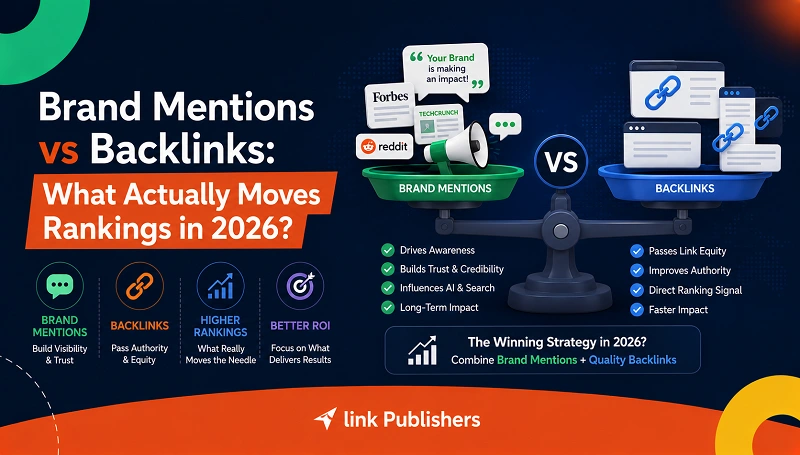
Backlinks are still one of Google’s strongest signals, full stop. Most businesses pair content marketing with guest posting services, digital PR services, and outreach to build the authority Google looks for. More often than not, strong link building services are what separate the page-one sites from everyone stuck below.
How Link Building Supports Organic SEO Growth
Few things drive organic SEO growth like link building. Content gets you into the race. Backlinks are what carry you toward the front. Here’s how it all connects.
Why Backlinks Matter
Every backlink works like a vote of confidence. When a trusted site points to yours, it tells Google your content holds up. Stack up enough of those votes and your rankings tend to follow. That’s exactly why backlinks for SEO still matter so much in 2026.
How Backlinks Build Authority
Authority doesn’t appear overnight. It accumulates as credible sites link to you over months and years. A consistent stream of high quality backlinks from relevant sources tells Google you’re a brand worth trusting in your field.
Guest Posting and Organic Rankings
Guest posting lands you editorial backlinks from authoritative sites in your corner of the web. Pulled off well, it builds authority and sends referral traffic your way. To avoid drowning in outreach, many businesses simply hand it off to guest posting services.
Digital PR and Organic SEO
Digital PR earns mentions and links from news outlets and the big publications. Those rank among the strongest authority signals you can get. Working with professional digital PR services helps brands land coverage that boosts rankings and visibility together.
Niche Edits and Link Equity
Niche edits slot your link into content that’s already published and indexed. The host page already carries authority, so your link inherits that trust right away. Compared to waiting for a new page to climb, it’s a faster route to link equity.
Common Link Building Mistakes
Chasing volume over quality is the classic error, and it backfires often. All of it results in trouble:
- Cheap bulk links
- Sites with zero relevance
- Over-optimized anchor text
Planning to buy backlinks? Stick to relevant, high-traffic sites that hold real editorial standards.
10 Proven Organic SEO Strategies to Boost Organic Traffic
To grow organic traffic you’ve got to satisfy search engines while genuinely helping the people who land on your page.
These ten organic SEO strategies do exactly that.

1. Target Low-Competition Keywords
Keywords aren’t all created equal. Go after the most competitive terms and you could wait years to rank. Hence, you should also aim for lower-difficulty keywords that still pull decent search volume. Long-tail keywords are gold for quick wins, and tools like Google Keyword Planner and Semrush make them easy to find.
2. Create Content That Keeps Readers Hooked
Write for your readers. Dig into their pain points and answer the questions they’re actually asking. Hook them with headlines that use numbers and power words. Keep paragraphs short and easy to skim, because online readers bail in seconds. Quality beats bulk every single time.
3. Optimize On-Page SEO
On-page work helps Google make sense of your content. Craft meta titles and descriptions that earn the click. Lean on header tags to give your content a clear structure. Weave in internal and external links to build a site architecture that holds together.
4. Build High-Quality Backlinks to Boost Authority
Backlinks remain a heavyweight ranking factor and one of the surest ways to increase organic traffic. They tell Google your site has earned its place. Here are the strongest ways to build them:
- Guest Posting: Earn editorial backlinks from authoritative sites in your niche. Guest posting services make it scalable.
- Digital PR: Land mentions and links from trusted publications. Digital PR services help you reach high-authority coverage.
- Niche Edits: Drop your links into existing, authoritative content that already ranks.
- Editorial Backlinks: Still one of the strongest authority signals around. You can also buy quality backlinks from vetted, niche-relevant sites.
Google rewards quality over quantity, always. A few strong, relevant links will outperform a hundred weak ones.
5. Strengthen Site Structure with Internal Links
Internal linking ties the pages of your own site together. It smooths navigation for visitors, helps Google crawl efficiently, and spreads authority across your pages. A thoughtful internal linking setup lifts the whole site.
6. Prioritize Mobile-First Optimization
Over half of all web traffic now comes from phones. Make sure these for your website:
- Adjusts to every screen size
- Loads in under three seconds
- Easy to tap offers navigation
7. Update and Refresh Outdated Content
Growth doesn’t always mean writing something new. Refreshing old posts with current data, fresh sections, and cleaner formatting can lift rankings quickly. Google notices updated, relevant content and rewards it. It’s one of the most efficient SEO techniques going.
8. Improve Page Load Speed
Sluggish pages send visitors running and drag your rankings down. Shoot for load times under three seconds. Compress your images, lean on a CDN, switch on caching, and strip out scripts you don’t need. Faster pages keep users happy and rankings healthy.
9. Add Visual Content for Engagement
Visuals pull readers in and make tricky ideas easier to grasp. Compress them so they load fast, add descriptive alt text with relevant keywords, and favor WebP format. Toss them into image sitemaps so search engines can actually find them.
10. Perform Regular SEO Audits
Organic SEO isn’t a set-it-and-forget-it job. Routine audits surface broken links, technical snags, and ranking slips before they spiral. Keep an eye on keyword performance, watch for algorithm updates, and test your page speed. A solid SEO audit keeps you competitive.
Organic SEO Checklist for 2026
Run through this organic SEO checklist to make sure nothing slips through. It splits the essentials into five buckets.
Technical SEO Checklist
- ✓ Site loads in under three seconds
- ✓ Mobile-friendly across all devices
- ✓ Secure HTTPS connection
- ✓ Clean, crawlable site structure
- ✓ XML sitemap submitted to Google
Content SEO Checklist
- ✓ Content matches search intent
- ✓ Target keywords placed naturally
- ✓ Headers structured logically
- ✓ Original, in-depth, helpful content
Link Building Checklist
- ✓ Build quality backlinks from relevant sites
- ✓ Earn digital PR mentions through digital PR services
- ✓ Publish guest posts via guest posting services
- ✓ Monitor anchor text diversity
- ✓ Review your backlink profile regularly with link building services
On-Page SEO Checklist
- ✓ Optimized meta titles and descriptions
- ✓ Internal links to related pages
- ✓ Descriptive image alt text
Monitoring Checklist
- ✓ Track rankings and organic traffic
- ✓ Watch for Google algorithm updates
- ✓ Fix broken links promptly
Organic SEO Examples That Drive Real Results
A few real organic SEO examples show how these tactics actually shake out across different kinds of businesses.
Organic SEO for SaaS
A SaaS company that couldn’t get traction started publishing deep comparison guides and product tutorials. They backed that content with editorial links from guest posting services. Six months later, their target keywords had reached page one and organic signups were climbing steadily.
Organic SEO for E-commerce
An e-commerce store kept struggling with its category pages, which almost never attract links on their own. So they ran targeted link building services campaigns to push authority toward those pages. Category rankings rose, and organic revenue came with them.
Organic SEO for Small Businesses
A local service company paired digital PR with backlinks to grow its footprint. Through digital PR services, they picked up coverage in regional publications. That authority gave both their local and organic rankings a real lift.
Best Organic SEO Tools for Businesses
The right organic SEO tools take a lot of the grind out of optimization. Here are the ones worth having.
- Google Search Console: Free, and great for tracking performance, indexing, and queries
- Google Analytics: Measures traffic, behavior, and conversions
- Ahrefs: Backlink analysis, keyword research, and competitor tracking
- Semrush: An all-in-one for SEO, keywords, and competitive research
- Screaming Frog: Technical audits and crawl analysis
- Surfer SEO: Content optimization built around top-ranking pages
If you’re just starting out, Google Search Console and Google Analytics are the place to begin. Both are free and cover the basics long before you need to spend on paid tools.
Common Organic SEO Mistakes to Avoid
Even smart strategies fall apart when these slip in:
- Ignoring search intent: Content that misreads what people want will never rank well
- Weak internal linking: Orphaned pages leave users and search engines guessing
- Poor technical SEO: A slow, broken site struggles no matter how sharp the writing
- Thin content: Shallow pages add nothing and get filtered straight out
- Lack of link building: Without backlinks, competitive keywords stay out of reach
- Publishing without authority building: Even great content rarely ranks if you buy backlinks carelessly or ignore authority altogether
Dodging these matters just as much as nailing the fundamentals. A single recurring mistake can quietly cap an otherwise strong site.
Organic SEO and Link Building: Why They Work Better Together
Treating organic SEO and link building as separate jobs is a mistake. They run as one system. Content gets you noticed, backlinks get you ranked. Here’s how the two feed each other.
Content Creates Visibility
Quality content gives you something worth ranking in the first place. It targets keywords, answers real questions, and earns the right to compete. Without it, backlinks have nothing to point to.
Backlinks Build Authority
On its own, content rarely topples established competitors. Backlinks supply the authority that lifts your pages past them. This is the moment SEO link building turns decent content into content that actually ranks.
Technical SEO Improves Performance
A fast, crawlable site lets your content and links do what they’re meant to. Technical health is the ground everything else stands on.
Together They Improve Rankings
Line up content, links, and technical SEO, and your rankings climb, then hold. Businesses chasing faster organic growth usually fold content optimization together with professional link building services, guest posting services, and digital PR services. Combined, they build the authority that powers lasting organic search rankings.
Wrapping Up
Organic SEO is still one of the smartest investments in digital marketing. It brings in sustainable traffic, builds real credibility, and compounds over time in ways paid ads simply can’t match.
Zero in on the right keywords, content that genuinely helps, and authority signals that hold up. Marry strong content with smart link building, and you’ll pull ahead of every competitor still leaning on content alone.
Want a hand building authority? Buy quality backlinks from Link Publishers and give your site’s authority and rankings a real push. And if you’d like ongoing help with organic SEO services, the team is a message away.
FAQs
Organic SEO is the practice of optimizing your website to rank higher in unpaid search results. It leans on quality content, a healthy site, and backlinks rather than paid placement.
It works by helping search engines understand and trust your site. Google crawls your pages, indexes them, then ranks them based on relevance, authority, and user experience.
Yes. It takes time, but organic SEO delivers traffic that keeps working long after the initial effort. The long-term ROI usually leaves paid ads far behind.
Most sites see results in 3 to 6 months. Newer websites may need 6 to 12 months, while established sites with existing authority often move faster.
Quite a lot, actually. Backlinks are one of Google’s strongest ranking signals, and quality link building services build the authority you need to rank for competitive terms.
Topical authority reflects how thoroughly your site covers a subject. Google rewards sites that show deep, connected expertise on a topic with stronger rankings across related keywords.