








The Authority Era Is Here: Global SEO Leaders Explain How AI Is Breaking Traditional SEO Signals


Explore this post with:
SEO practitioners are watching a pattern emerge that’s hard to ignore. High-quality content that would have ranked on page one 18 months ago now sits on page three. Sites publishing comprehensive, well-researched articles see minimal ranking movement. Meanwhile, competitors with fewer pages but stronger backlink profiles from major publications are climbing past them.
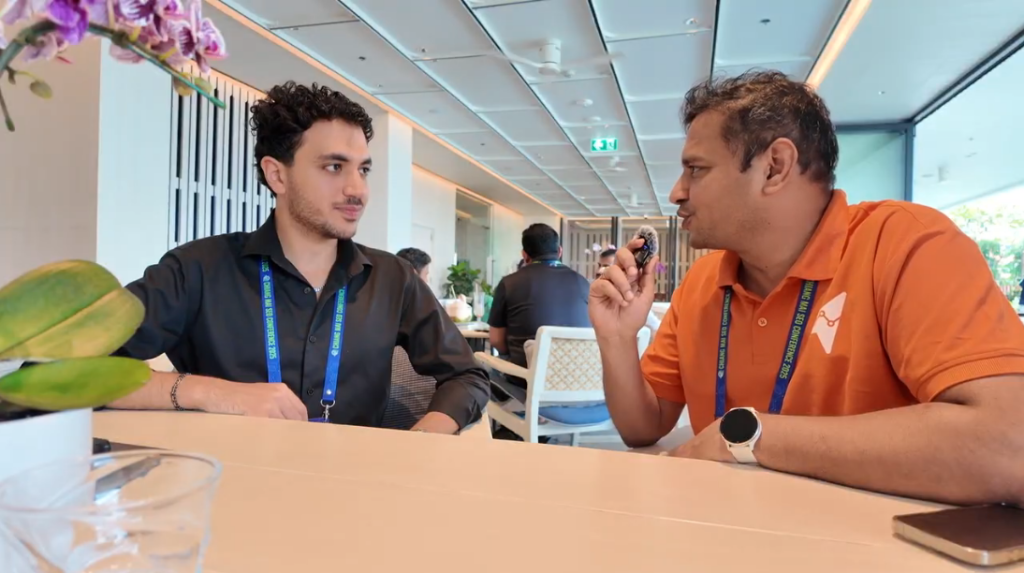
At the recent CMSEO conference, industry veterans Matt Diggity, Greg Gifford, Alex Husman, Stewart, Muri, Bri, and Anthony gathered to dissect exactly what’s changed and what’s working in response.
Their diagnosis was clear and consistent across every interview:
- Search engines have shifted to authority-first ranking, where external validation signals carry more weight than on-page content optimization.
- SEO is not dying, it’s evolving. And authority-building platforms like Link Publishers are becoming structural, not optional.
This shift is already determining winners and losers in competitive search verticals. So, understanding it is the difference between ranking and invisibility.
Let’s break down what’s actually happening, why it matters, and what you need to do next.
AI-Driven Content Saturation Is Weakening Content as a Primary Ranking Factor
AI has removed the biggest barrier to content creation: time. What once took weeks now takes minutes, and as a result, the internet is flooded with well-written, keyword-optimized content.
This has fundamentally changed how search engines evaluate quality.
When hundreds of pages cover the same topic with similar structure, depth, and terminology, content quality alone stops being a reliable ranking signal. From Google’s perspective, “good content” has become the baseline, not the differentiator.
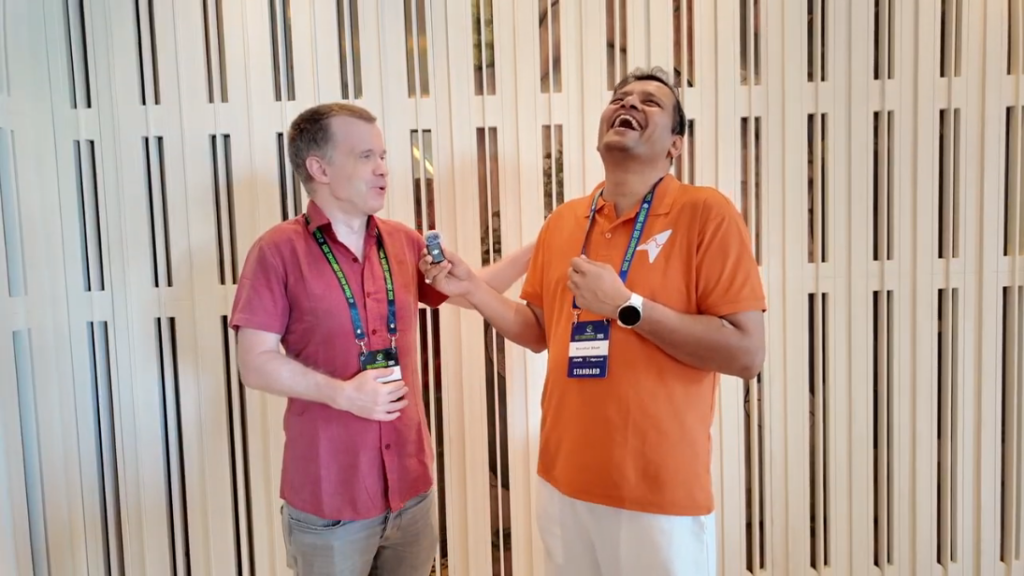
As Matt Diggity summarized, “Content on the internet has 100xed. The only real differentiators left are links, brand, and social signals.”
To resolve this signal overload, Google is increasingly prioritizing authority indicators that are harder to automate:
- Editorial backlinks from reputable publishers
- Brand mentions across trusted websites
- Social and YouTube engagement showing a genuine audience connection
- Real user behavioral data measuring actual satisfaction
The pattern emerging across industries: Sites publishing less content but earning strong editorial validation are outperforming content-heavy competitors. This means Google is relying more heavily on trustworthy off-page signals.
AI Has Not Replaced Local Search – Google Still Dominates
Despite rapid advances in ChatGPT, Gemini, and other large language models, local search remains firmly under Google’s control. In fact, experts at CMSEO confirmed that AI still struggles to produce accurate local business recommendations.
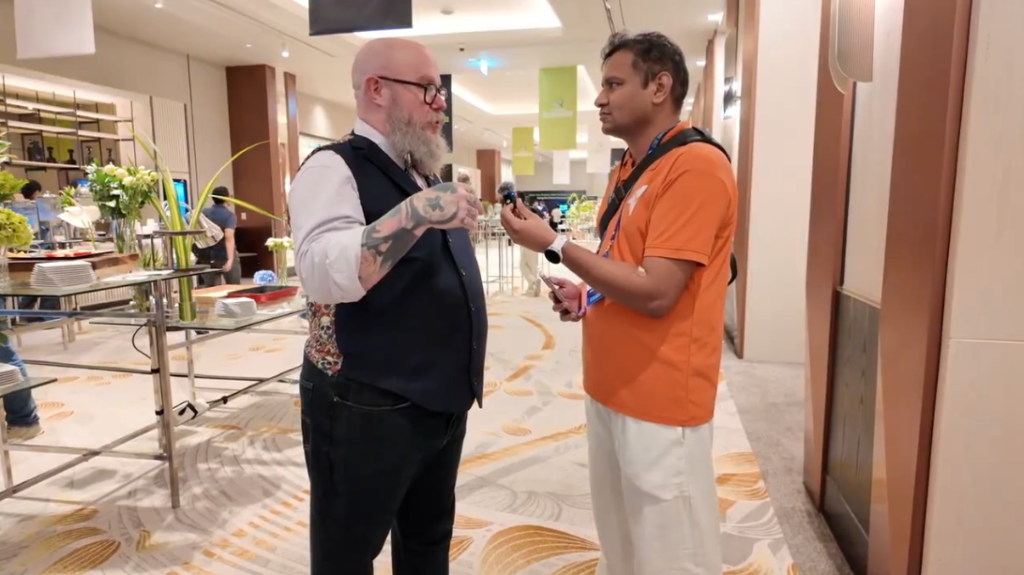
“LLMs hallucinate badly on local searches. Local SEO still depends on Google’s own data,” said Greg.
When asked for nearby services, AI tools routinely fall back on Google’s ecosystem (Maps, Business Profiles, reviews, and citation databases) rather than producing independent evaluations.
This dependency reinforces a critical reality for local SEO: Google remains the source of truth. Visibility is still driven by signals that AI cannot yet replicate or validate consistently.
In practice, this means:
- Google Business Profiles continue to be the foundation of local visibility
- Local citations and hyperlocal backlinks outperform broad, non-local guest posts
- AI cannot yet assess proximity, legitimacy, or real-world trust with accuracy
For local SEO practitioners, this shift offers stability rather than disruption. Local rankings continue to reward strong fundamentals, accurate data, and genuine regional authority.
Generative Engine Optimization (GEO) Emerges as SEO’s New Frontier
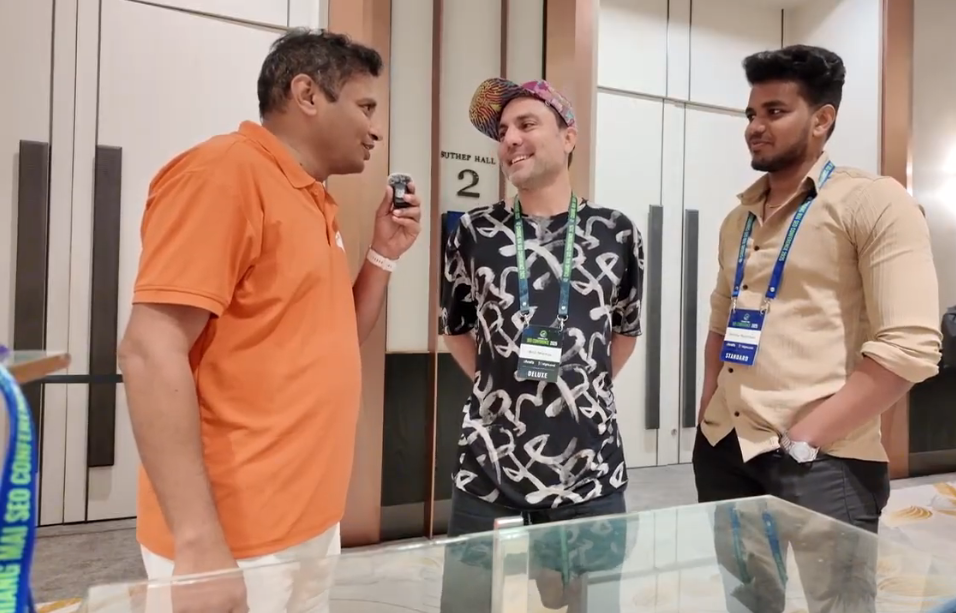
One of the most significant shifts discussed at CMSEO came from Bri and Anthony, who introduced Generative Engine Optimization (GEO): the practice of optimizing visibility inside AI chatbots such as ChatGPT and Gemini.
Their research highlighted several critical realities:
- Only around 40% of website pages are currently indexed or retrievable inside LLMs
- Citation frequency strongly influences whether a brand appears in AI-generated answers
- Co-citation similarity (which brands are mentioned together) is increasingly replacing classic link metrics
- The RAF (Rank Anything First) algorithm can push brands from position #10 to #1 in chatbot results through strategic citation patterns
“To rank inside LLMs, focus on citation frequency and authority, not just backlinks,” explained Anthony.
This creates a fundamental shift in SEO strategy. Brands must now optimize for two distinct environments:
- For Google: Backlinks, technical SEO, content depth, user signals, and domain authority
- For LLMs: Citation frequency, brand mention patterns, authoritative source placement, co-citation networks, contextual relevance
Brand Mentions Are Becoming as Valuable as Backlinks
Brand mentions are emerging as a ranking signal nearly as influential as traditional backlinks, especially within AI-generated results.
Unlike classic SEO, where links function as explicit endorsements, LLMs evaluate credibility through repeated references, contextual mentions, and brand co-occurrence across authoritative sources.
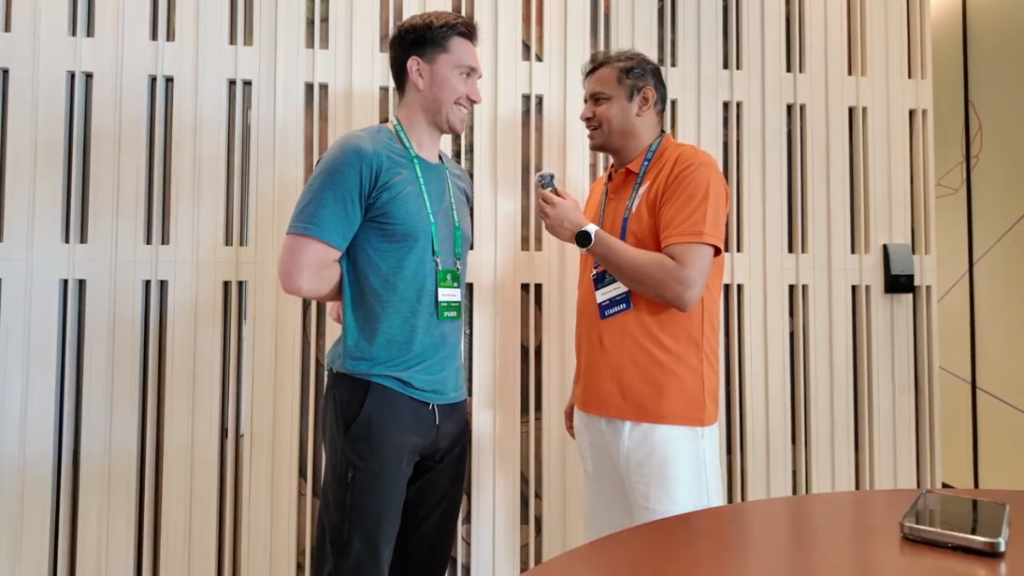
Alex Husman highlighted this shift clearly:
“Even without a link, a brand mention alone can push a brand into LLM answers.”
As AI search adoption grows, experts expect:
- Brand mentions to approach a 50/50 value split with backlinks
- Guest posts to evolve away from anchor-text tactics toward consistent brand messaging
- Sites with broad, credible digital footprints to outperform those built on link volume alone
This makes it clear that the future of SEO is not “just backlinks,” but holistic brand presence.
Visibility now depends on being repeatedly and credibly referenced across the web, not simply linked. For brands and agencies, this elevates consistent, high-quality visibility across trusted publications into a primary driver of both search rankings and AI discoverability.
Smart SEOs Shift to Data Studies, Templates & Content Assets
Another major trend from CMSEO was the move away from manual, one-off link outreach toward passive authority assets: content designed to earn links naturally over time. Data studies, history content, templates, and calculators are now among the most link-attracting content types.
What makes these assets linkable:
- Original data provides quotable statistics that journalists and bloggers reference repeatedly in their own content
- Historical content serves as authoritative sources that gain backlinks over time as the definitive resource on a topic
- Templates and calculators deliver immediate utility, making them bookmark-worthy and share-worthy across social platforms
- Interactive tools solve specific problems, generating organic backlinks from users who find them genuinely helpful
However, creating linkable assets is only half the equation. Distribution determines whether they actually attract links at scale.
Platforms like Link Publishers help brands distribute and amplify these assets by offering placements across authoritative domains, boosting organic visibility and link acquisition. Rather than hoping bloggers discover your research organically, strategic placement ensures your data studies reach audiences most likely to reference them in their own content.
AI Agents Are Transforming SEO Workflows, but Strategy Still Matters
Muri, an AI automation expert, explained at CMSEO that teams are increasingly using AI to handle repetitive, operational tasks. Common use cases include:
- Link prospect qualification: Analyzing Domain Authority, niche relevance, traffic patterns, and editorial standards at scale
- Email extraction and outreach: Finding contact information and personalizing pitch templates based on recent publication topics
- Keyword cannibalization detection: Identifying pages competing for the same search terms across large sites
- Content planning and clustering: Mapping topic relationships and content gap analysis across competitive landscapes
- Strategic link placement identification: Finding the contextually best pages on your site for incoming links
However, Muri stressed an important limitation:
“Automating a broken process makes it worse. Test manually first, then scale.”
Further, experienced practitioners aren’t using a single AI tool for everything. Instead, they’re matching models to specific tasks based on each model’s strengths:
- Gemini: 96% cheaper for large-scale tasks, like analyzing hundreds of websites, extracting structured data, and processing large datasets
- Claude: Superior for writing outreach emails, content briefs, and any communication requiring a natural, conversational tone
- GPT: Best for strategic tasks like keyword clustering, content architecture planning, and complex analysis requiring logical reasoning
Link Publishers supports this automation-first environment with transparent metrics: Domain Authority, traffic estimates, niche categories, and editorial standards.
Every publication undergoes human vetting for legitimate editorial operations, eliminating low-quality sites. The structured marketplace offers API-accessible filters, allowing agencies to programmatically identify ideal placements.
Reddit Remains a Powerful Channel for Real Experiences
Even as AI-generated content floods online communities, Reddit continues to reward authentic participation over automation. Experts at CMSEO noted that posts from aged accounts, detailed first-hand experiences, and genuine problem-solving consistently outperform synthetic or promotional content.
Here’s why Reddit resists AI manipulation:
- Community moderation identifies fake content quickly: Subreddit moderators and active community members flag suspicious accounts, generic responses, and obvious promotional content almost immediately.
- Aged accounts carry credibility: A 5-year-old account with a consistent posting history in relevant subreddits holds significantly more trust than new accounts. This makes it difficult to manufacture credibility at scale.
- Real experiences generate engagement: Detailed, nuanced answers that reflect genuine knowledge earn upvotes and meaningful discussions. Generic AI-generated responses get ignored or downvoted.
- Context matters more than keywords: Reddit users value specificity, personal anecdotes, and practical insights over polished, optimized content.
So brands and agencies must participate genuinely in relevant communities without overt self-promotion. Answer questions and share real experiences and case studies that demonstrate value through authentic storytelling, not sales pitches
Overall, build a reputation over time through consistent, helpful engagement that positions your brand as knowledgeable.
How Link Publishers Supports Authority-First SEO
The expert insights shared at CMSEO 2026 point toward a new age of SEO driven by authority signaling, brand presence, high-quality backlinks, GEO and LLM visibility, and strategic content distribution.
Link Publishers’ marketplace is uniquely built for this new era, offering brands and agencies the infrastructure to execute authority-first strategies at scale. It offers:
1. Verified, high-authority websites: All publications are vetted for real editorial standards, consistent traffic, and authentic engagement. This eliminates low-quality link networks and preserves genuine authority signals.
2. Niche-relevant placements: Brands earn links from industry-specific publications, reinforcing contextual relevance that both Google and LLMs prioritize.
3. Scalable brand visibility: Structured workflows replace slow, manual outreach, enabling faster authority building at a competitive scale.
4. Local SEO support: Access to hyperlocal and regional publications strengthens Google Business Profiles and local pack visibility.
5. Transparent metrics and filters: Clear visibility into authority, traffic, niche relevance, and editorial quality supports data-driven placement decisions.
6. Future-ready for Google and AI search: Each placement strengthens traditional backlinks while building citation patterns that influence LLM visibility and GEO performance.
The insights from global SEO leaders are clear: content is the entry ticket, authority decides visibility.
If you want to future-proof your SEO strategy for Google, AI Overviews, and LLM-driven search, your backlink and brand visibility strategy needs to evolve now.
Whether you’re exploring authority-led SEO or actively building it, Link Publishers is here to support you at every stage of your link-building journey.
Let’s shape the future of search together!
Also read: