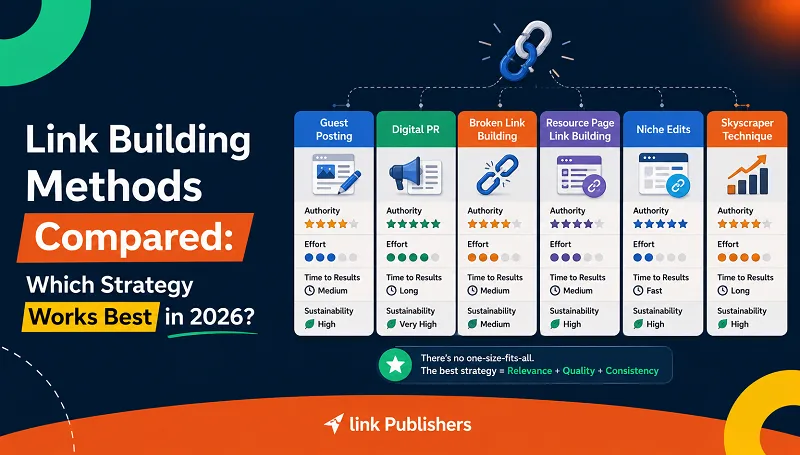









Link Building Pricing Explained: What You Pay For & Why


Explore this post with:
Link building is one of those SEO services where pricing seems intentionally mysterious. You’ll find:
- Agencies charging anywhere from $500 to $10,000 per month,
- Freelancers offering links for $75 each, and
- Premium services that won’t even discuss rates until after a strategy call.
They all claim to be selling the same thing, so why is the pricing so different?
This guide explains what businesses are really paying for when they invest in link building and why pricing varies so dramatically. Plus, how to understand whether a quoted price reflects real value or hidden risk.
Why Link Building Has No Fixed Price
Unlike advertising, backlinks are not sold on a public market.
Every link comes from a different website with its own audience, editorial standards, and level of trust with Google.
A blog that was built for SEO can publish unlimited paid links with no risk to its reputation. A respected SaaS publication or business blog cannot. It has to protect its credibility with both readers and Google.
Hence, two links may look similar on a report, but Google values them very differently.
This creates massive pricing variation. What you are really paying for is not just a link, but the difficulty of earning placement on a site that Google and users actually trust.
Understanding the Link Building Pricing Landscape
Most link-building services fall into three common pricing models. The difference lies in how the work is done and the level of quality you can expect.
1. Monthly retainer pricing
This is the most common model, where agencies charge between $500 and $ 5,000 per month, depending on the scope of work.
Here’s what that usually looks like:
| Price range | Services |
| $500-$1,500 per month | Basic outreach and placements on lower-tier but real websites. Often focused on volume and easier-to-get links. |
| $1,500-$3,500 per month | More targeted outreach, better content, and placements on niche and industry-relevant sites. |
| $3,500-$10,000 per month | Full-scale campaigns with content creation, relationship-based outreach, and placements on high-authority industry sites and publications. |
Best for: Businesses that want steady, long-term link growth rather than one-off placements.
2. Per-link pricing
With this model, you pay for each link individually.
It’s easier to understand, but the quality can vary a lot depending on the provider.
Typical ranges look like this:
- $50-$150: Low-quality blogs, link networks, or sites that exist mainly to sell links
- $200-$400: Small real blogs and basic guest post sites
- $500-$1,000: Established niche websites with real traffic
- $1,000-$2,000+: Authority sites, industry publications, and high-visibility placements
Best for: SaaS teams and small businesses that need a few targeted links from specific niche or authority sites, not an ongoing link-building campaign.
3. Performance-based pricing
This model ties payment to results, usually based on how many links are successfully placed. Some agencies charge per live link. Others use a small base fee plus bonuses when certain targets are reached.
Best for: Businesses that want to test link building with minimal upfront risk. And are comfortable trading consistency and quality control for guaranteed link delivery.
The Four Core Costs Behind Every Link
A link is the final result of several layers of work happening behind the scenes. These are the four things that drive most of the cost:
1. Finding sites that are actually worth getting links from
Not every website is useful for SEO.
Before any outreach starts, good link builders have to find sites that:
- Get real organic traffic
- Publish original content
- Are not part of link networks
- Match your industry
This is not something that can be done with a simple database export. Many sites look fine on the surface but are already losing trust in Google or exist only to sell links.
Filtering those out takes time and experience. And it’s one of the biggest differences between cheap and high-quality services.
2. Getting editors to say yes
Most good websites don’t sell links.
They accept pitches, articles, expert quotes, or story ideas. And only if those meet their editorial standards. That means link builders have to:
- Find the right contact
- Send personalized outreach
- Follow up multiple times
- Match the site’s topic and style
Agencies that have built real relationships with publishers can get placements that others simply can’t. That access is part of what you’re paying for.
Reality check: High-quality link building is constrained by response cycles, not effort. Editors often take weeks to reply, request revisions, or schedule publication. You’re paying for outreach, but also for teams that can manage dozens of parallel conversations without rushing bad placements.
3. Creating content that gets approved
Most quality links come from new articles, not from dropping links into old posts.
Those articles have to be good enough for:
- The publisher’s audience
- The site’s editors
- Google’s quality systems
- Your brand
This means real writing, editing, and sometimes multiple revisions. Cheap services often skip this step or use generic content, which limits where the links can be placed.

4. Managing risk and compliance
Google is very good at spotting unnatural link patterns.
If too many links come from the same sites, use the same anchor text, or follow obvious patterns, they can lose value or even hurt your site.
Good agencies manage this by:
- Varying anchor text
- Spreading links across different sites
- Mixing different types of placements
- Monitoring link profiles over time
This kind of risk management isn’t visible in a report, but it’s a big reason why quality link building costs more.
Link Building Pricing Tiers: What You Actually Get
Here’s what different price ranges typically mean in the real world:
| Price per link | Type of website | Editorial standards | Traffic quality | SEO impact | Risk level | Who this is usually for |
| $50-$150 | PBNs, link farms, disposable blogs | None to very low | Fake or near-zero | Weak, often temporary | Very high | Burn-and-churn sites, affiliates, testing |
| $200-$400 | Low-tier real blogs, guest-post networks | Basic approval | Low to moderate | Small, short-term | Medium | New websites, low-competition niches |
| $500-$1000 | Established blogs, niche publications | Real editors & review | Consistent organic traffic | Strong, long-term | Low | SaaS, ecommerce, agencies |
| $1000-$3000 | Authority sites, industry media, news | Strict editorial standards | High, engaged audience | Very strong, compounding | Very low | Funded startups, enterprise brands, PR-driven SEO |
Why Paying More for Links Often Delivers Better ROI
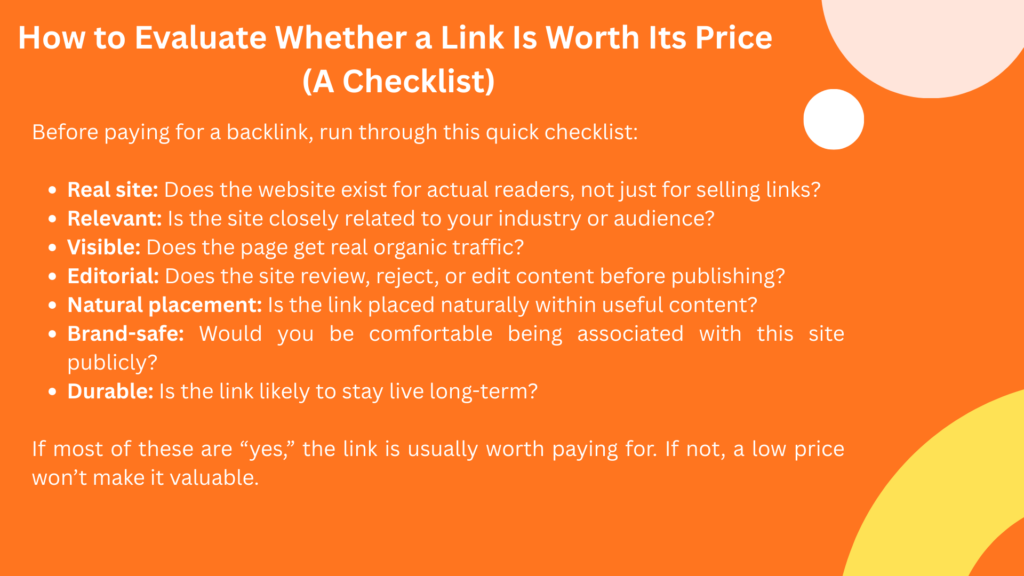
On the surface, it can seem illogical to pay $1,000 for a single backlink when $1,000 could buy 10 or even 20 cheaper ones.
But link building does not work on volume alone. It works on:
1. Signal strength
Google weighs links based on the authority, relevance, trust, and naturalness of their placement. One editorial link from a respected industry site can send a stronger ranking signal than dozens of low-quality placements.
2. Compounding credibility
When recognized publications cite your site, other editors and journalists are more likely to trust and reference you. Over time, this creates a flywheel where each good link increases the value of the next one.
Cheap links age badly. They do not increase your brand’s credibility, and in some cases, they can even make legitimate publishers less likely to work with you.
Operational reality: Low-cost link building often increases coordination overhead: more reviews, more corrections, more back-and-forth. Higher-priced services absorb that complexity, which quietly frees up internal time and attention. That reclaimed time is part of the ROI.
Red Flags: When Pricing Seems Too Good (or Bad) to Be True
Some pricing signals should immediately make you pause. These are the most common ones.
1. Suspiciously low prices
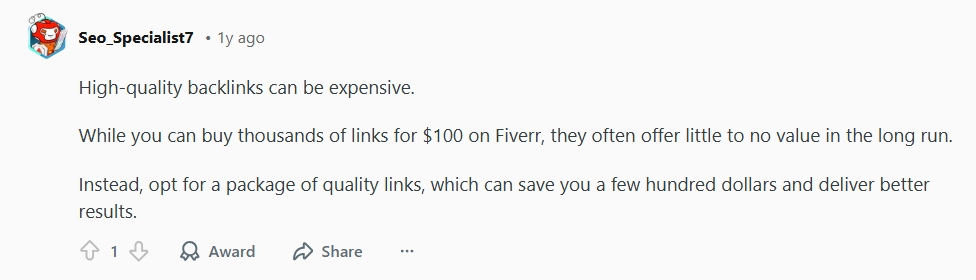
If someone offers 50 links for $100, they’re likely using Private Blog Networks (PBNs), automated submission to low-quality directories, comment spam, or purchased links from link farms. These tactics violate Google’s guidelines and can result in penalties.
2. Unrealistic guarantees
No legitimate agency can guarantee specific rankings because Google’s algorithm involves hundreds of factors beyond backlinks.
Be wary of promises for links from specific high-authority domains, as these sites rarely accept direct payment for links. Claims of “100% natural links” at scale should also raise questions, since truly natural links can’t be manufactured on demand.
3. Lack of transparency
If a provider won’t explain where links come from, how outreach is done, or what standards they follow, that’s a problem. Trustworthy services are clear about their process, the type of sites they work with, and how results are reported.
The Bottom Line
Good link building costs money. Cheap link building usually costs you more later.
Prices vary because not all links carry the same weight or risk. Once you understand what goes into earning strong links, it’s easier to tell the difference between real value and shortcuts.
Focusing on fewer, better links may cost more upfront, but it’s safer and more effective over time. Pay attention to what actually moves rankings and traffic, adjust as you go, and don’t hesitate to ask hard questions before trusting anyone with your backlink profile.
Related content







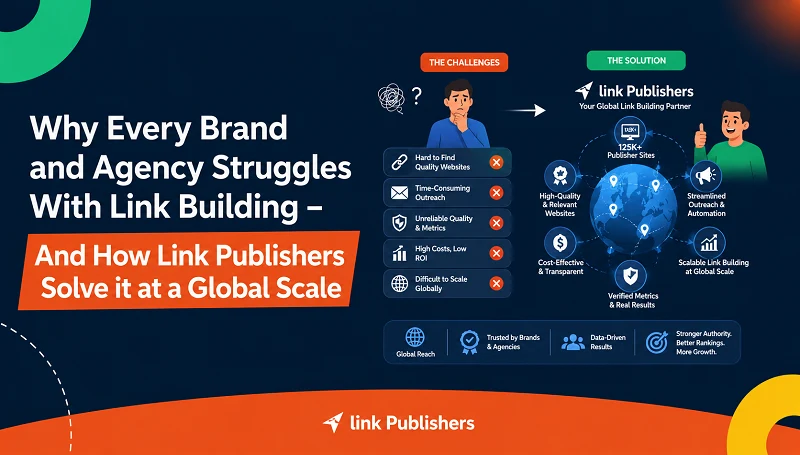
Why Every Brand and Agency Struggles With Link Building - And How Li...
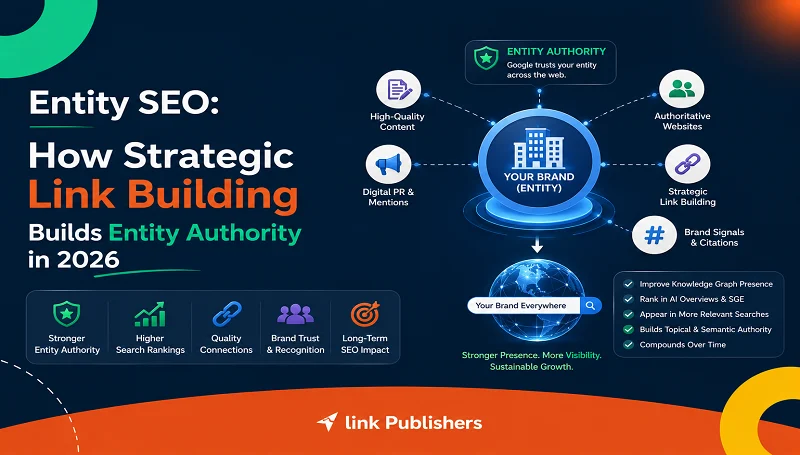
Entity SEO: How Strategic Link Building Builds Entity Authority in 2...