








Contextual & Editorial Link Building Explained (Why It Outperforms Cheap Links)


Explore this post with:
You’ve been staring at your competitor’s website, and nothing makes sense. Their content isn’t better than yours. Their design is average. Yet they’re dominating page one while you’re stuck on page three. You check their backlinks; thousands compared to your few dozen.
Then the ads start appearing: “1,000 High-Authority Backlinks for $149!” “Guaranteed Page 1 Rankings!” It’s tempting. It’s affordable. And you’re desperate for results.
But the truth is, one purchase like this could destroy months of legitimate SEO work. Sometimes the damage is instant, but often it happens gradually through suppressed rankings, ignored links, or penalties you do not see until traffic drops.
Your successful competitors are earning links through contextual and editorial link building. It’s a completely different strategy, and it’s the only approach that works in 2026.
In this guide, we’ll explain why cheap links fail long-term and how to build contextual links that move rankings instead of putting them at risk.
What Is Contextual Link Building?
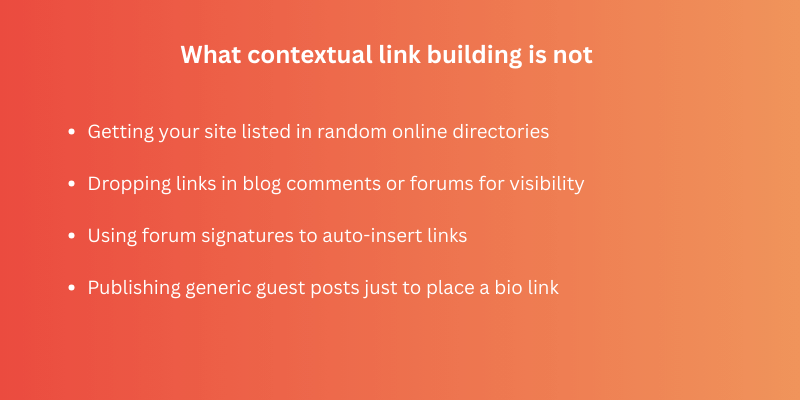
Contextual link building is the practice of earning backlinks that appear naturally within relevant, high-quality content, where they belong and help the reader.
Imagine reading an in-depth article on sustainable living tips for beginners. In a section on eco-friendly clothing, the author mentions a brand known for ethical manufacturing and links to its website. The mention is not forced or promotional it fits the topic and adds value. That is a contextual link.
What Is Editorial Link Building?
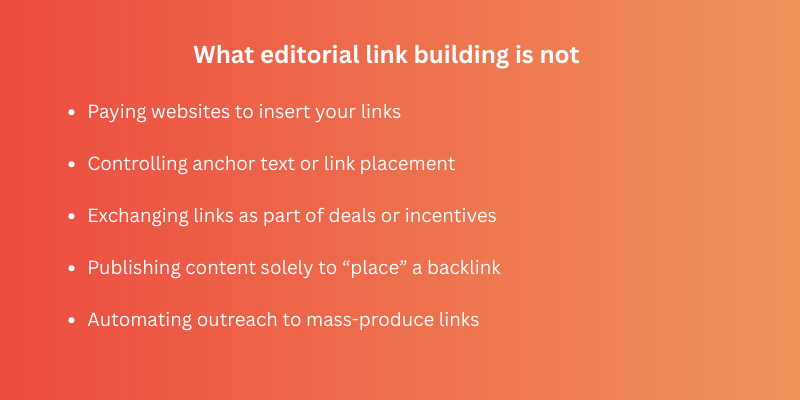
Editorial links result from an editorial decision, not paid placement or manipulation. Editors, journalists, or content creators include these links because your content, research, product, or expertise strengthens their work.
For example, if a tech journalist uses your original research in an article about industry trends, or a blogger links to your guide as the most accurate source, that is called an editorial link.
Why Contextual and Editorial Links Matter
Search engines no longer reward links simply for existing. They evaluate why the link exists, where it’s placed, and how it fits with the surrounding content.
Here’s why contextual and editorial links are worth ten times the effort:
- They send strong trust signals: When a reputable site links to you inside relevant content, it signals topical credibility. This goes beyond passing PageRank; it tells search engines you belong in that conversation.
- They attract qualified traffic: Readers who click a link in a relevant article already care about the topic. That traffic converts better, engages longer, and behaves like real users, not bots or paid clicks.
- They hold long-term value: Editorial links are rarely removed and rarely devalued. Cheap links disappear, get ignored, or lose value after updates. Contextual links keep paying dividends.
- They reduce penalty risk: Because these links align with search guidelines and editorial intent, they’re far safer than artificially placed links that exist only to influence rankings.
The Problem with Cheap Links
Cheap link services typically rely on a few problematic tactics:
1. Private Blog Networks (PBNs): These are networks of websites created solely to manipulate search rankings. They often have thin content, irrelevant topics, and obvious link patterns that search engines can detect.
2. Low-quality directories and link farms: Sites that exist only to house links, providing no value to actual users.
3. Comment spam and forum signatures: Links dropped into blog comments or forum profiles with no contextual relevance.
4. Automated outreach at scale: Mass-produced content with inserted links that don’t serve the reader.
Google has become remarkably sophisticated at identifying unnatural link patterns. Websites relying on cheap links often experience traffic drops, ranking losses, or even manual penalties that can take months to recover from.
How to Earn Contextual and Editorial Links
You don’t earn contextual or editorial links by asking for them directly. You earn them by giving people a reason to reference you. Here’s how to do it:
1. Create reference-worthy content
Contextual and editorial links come from content people need to reference, not skim and forget. This usually means original insight, clarity, or data that saves another writer time.
How to do it:
- Pick one narrow question and answer it better than anyone else: Don’t write “Everything about SEO.” Write “How search engines evaluate link context in 2026.” Writers link to precise answers, not broad overviews.
- Add something original: This could be data, a framework, a clear definition, a comparison, or a firsthand observation. If your content doesn’t add anything new, there’s no reason to cite it.
- Make it easy to reference: Use clear headings, short explanations, and quotable lines. If a writer can lift a sentence or concept without rewriting it, you’ve made their job easier and earned a link.
- Write for the second reader, not the first: The first reader learns from your content. The second reader (a blogger, journalist, or editor) decides whether it’s worth citing. Optimize for them.
| Example: Moz’s Beginner’s Guide to SEO is one of the most popular resources in digital marketing. By offering clear, helpful content for beginners, Moz has earned thousands of links from universities, marketing blogs, and industry publications. Professors include it in their course materials, bloggers use it to explain SEO, and forums often suggest it to newcomers. |
2. Become a source, not a promoter
The fastest way to kill editorial links is to sound like you’re selling something.
Journalists and editors link to sources that help them explain an idea, support a claim, or add credibility to their story. The moment your content shifts from informing to persuading, it stops being reference-worthy.
How to ensure your content is treated as a source:
- Separate your product from your insight: Publish content that explains the problem space, not just your solution. Sources are neutral and informative; promoters are biased.
- Answer the questions writers actually ask: Reporters and bloggers look for definitions, causes, implications, and trends. Create pages that answer those directly, without a sales angle.
- Share data, not opinions alone: Opinions are fine, but they’re more linkable when backed by data, experiments, or real-world observations.
- Be quotable: Write in clear, confident statements that can be cited without rewriting. If a sentence stands on its own, it’s link-ready.
- Show your work: Explain how you reached a conclusion. Transparency builds trust and makes editors more comfortable linking to you.
| Example: HubSpot often shares new research about marketing trends, consumer behavior, and industry benchmarks. Reports like their ‘2026 State of Marketing’ are frequently mentioned in marketing publications, news sites, and blogs. Journalists covering email marketing or social media statistics often cite HubSpot’s data as a trusted source. |
3. Build real industry relationships
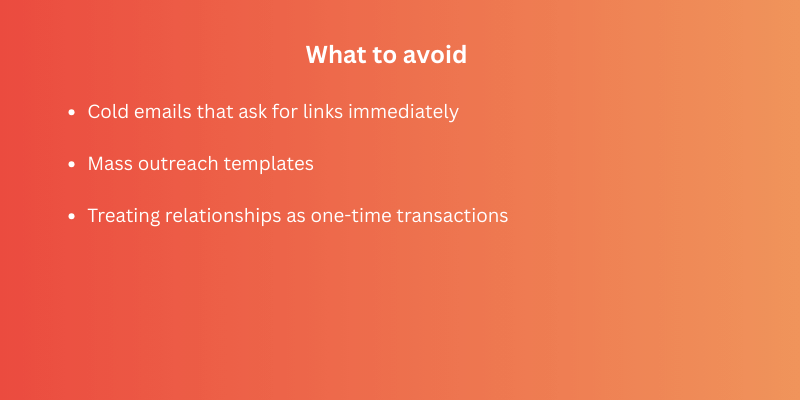
Editorial links are rarely the result of a single email. They tend to come from familiarity built over time. Writers link to people they recognize, respect, and trust.
How to do it:
- Engage before you need anything: Comment thoughtfully on articles, share work you genuinely find useful, and reference others’ insights in your own content. Relationships start long before link opportunities.
- Be helpful without asking for links: Share data, clarifications, or additional context when someone publishes on your topic. When you consistently add value, links become a natural byproduct.
- Stay visible in the right circles: Follow journalists, editors, and industry writers in your niche. Pay attention to what they cover and how they frame topics. Then, contribute where it makes sense.
- Collaborate, don’t pitch: Co-authored pieces, expert quotes, roundups, and interviews build mutual credibility. These relationships often lead to organic, in-content links later.
- Play the long game: Editorial links often come from people who’ve seen your name multiple times. Familiarity lowers friction when it’s time to reference a source.
4. Do things worth covering
Writers link to work that strengthens their story, not content that needs justification. When your actions, decisions, or resources add substance to a broader conversation, links naturally follow.
Most link-building strategies fail at this point. They focus on distribution and outreach instead of creating moments, insights, or resources that deserve attention.
What actually earns coverage:
- Original research or experiments that introduce new data
- Clear, defensible stances on industry issues others are afraid to take
- Useful tools, templates, or open resources people can point readers to
- Transparency around process, decisions, wins, and failures
- Work that connects to an existing debate, trend, or problem
| Example: Buffer’s radical transparency approach, which includes publicly sharing salaries, revenue figures, and business metrics, has earned them countless editorial links from business publications, HR blogs, and startup media. Articles about workplace transparency, startup culture, and innovative business practices often cite Buffer as an example, linking to their open salary calculator and transparency dashboards. This was not a link-building strategy, but a brand decision that naturally attracted editorial coverage. |
5. Convert brand mentions into links
Not every editorial link starts as a link. Many start as unlinked brand mentions, and those are some of the easiest wins if you handle them right. Writers already know who you are. They’ve already referenced you. The only thing missing is the link.
Here’s what works:
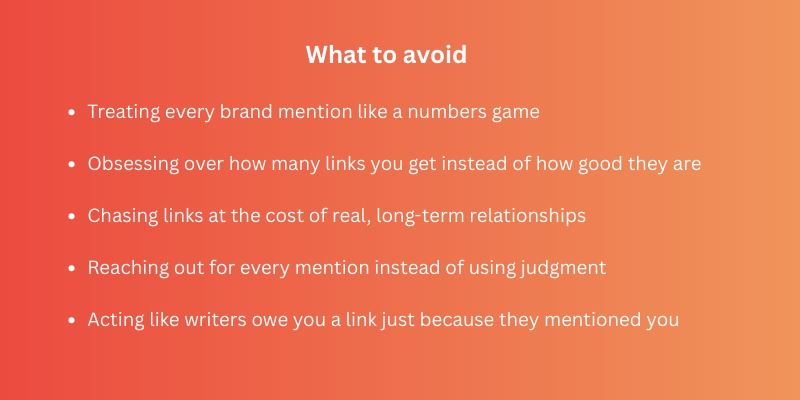
- Monitor brand mentions regularly: Track mentions of your brand name, product, research, or key people across blogs, news sites, and industry publications. Focus only on high-quality, relevant coverage.
- Check intent before reaching out: If the mention supports an argument, explains a concept, or references your work, it’s a strong candidate. If it’s a throwaway mention, leave it alone.
- Keep outreach short and respectful: A simple note works best. Acknowledge the mention, thank them, and explain that a link would help readers access the referenced resource directly.
- Link to the most relevant page: Don’t default to your homepage. Point to the exact article, study, or resource they referenced so the link improves the reader’s experience.
- Accept that not every mention converts: Some editors won’t update published pieces, and that’s fine. Even a partial conversion rate adds up over time.
The Long Game Always Wins
There’s no shortcut to sustainable rankings.
Those $99 link packages might boost your backlink count temporarily, but they won’t drive traffic, build authority, or survive the next algorithm update. Meanwhile, your competitors earning editorial mentions in industry publications are building assets that compound in value year after year.
The path forward isn’t complicated. Start with one exceptional resource: original research, a comprehensive guide, or unique insights your industry needs. Distribute it to publications where your audience actually reads. Build relationships with editors and writers who cover your space.
Will it take longer than buying links? Yes. Will it cost more upfront? Probably. But you’re building a foundation that strengthens over time.
Related content
)







Why Every Brand and Agency Struggles With Link Building - And How Li...
Entity SEO: How Strategic Link Building Builds Entity Authority in 2...