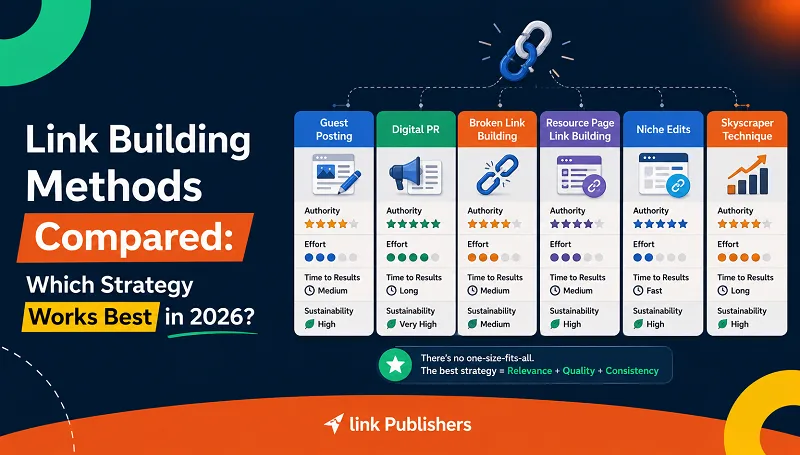









Why do most link building campaigns fail even with good content?


Explore this post with:
For years, marketers believed good content was the hardest part of SEO. Write something valuable, publish it, promote it lightly, and backlinks will follow naturally. That assumption no longer holds true.
Today, thousands of well-written articles attract little to no links. Not because the content lacks quality, but because the dynamics of editorial attention have fundamentally changed. Good content is no longer impressive. It is expected.
In highly competitive markets like the US and UK, publishers receive hundreds of pitches every week. Editors are not searching for content to fill space. They are filtering aggressively to protect credibility.
Standing out now requires more than effort. It requires strategic positioning, differentiated thinking, and a clear reason for someone to reference your work.
Link building has not stopped working. But many campaigns are structured in ways that quietly guarantee failure long before the first outreach email is sent. Understanding why this happens is the first step toward building authority that actually compounds.
The biggest misconception about link building
One of the most persistent myths in SEO is the belief that quality automatically earns visibility.
It does not.
The internet is saturated with good content. Comprehensive guides, detailed tutorials, industry explainers, and well-researched opinion pieces exist across nearly every niche. From cybersecurity publishers in London to SaaS resource hubs in San Francisco, the bar for what qualifies as useful content has risen dramatically.
Editors do not link because an article is decent. They link because referencing that article strengthens their own work. Every outbound link carries reputational weight. When a publisher cites a source, they are implicitly telling readers, “This information is trustworthy.”
That decision is rarely casual.
Many campaigns drift off course because teams overinvest in production while underinvesting in narrative and positioning. They assume effort will translate into recognition.
In reality, effort is invisible unless it creates distinct value.
Here is the uncomfortable truth: most campaigns do not fail because of algorithm updates. They fail because they were never strategically sound to begin with.
Why do most link-building campaigns collapse?
1. Campaigns start with tactics instead of strategy
A surprising number of campaigns begin with a tactical question: Where can we get links?
The more effective question is: Why would anyone cite this?
Without a compelling answer, outreach becomes mechanical. Emails are sent in batches. Follow-ups accumulate. Dashboards show activity. Yet results remain inconsistent.
This pattern is especially visible among growing technology companies in Australia that attempt to secure placements in US publications without first establishing editorial familiarity. The content is often strong, but the contextual bridge is missing.
Editors are far more receptive to sources they recognize. Authority is rarely built overnight.
Strategy creates relevance. Tactics alone create noise.
Organizations that succeed typically reverse the order. They identify the conversations they want to influence, develop content that contributes meaningfully, and then pursue placements where that contribution feels natural.
When strategy leads, outreach becomes a continuation of the narrative rather than a cold interruption.
2. Content is built to rank, not to be referenced
There is an important distinction between rankable content and cite-worthy content.
Rankable content answers existing questions.
Link-worthy content introduces something new to the discussion.
Many campaigns prioritize completeness. They produce long, structured articles that cover every angle of a topic. While useful for search visibility, these pieces often lack the originality editors look for when selecting sources.
Predictability is the enemy of citations. Editors typically search for at least one of the following:
- A perspective they have not encountered
- Proprietary data that supports their reporting
- Expert interpretation grounded in real experience
Without these elements, even polished articles struggle to attract attention.
Consider the difference between a generic “Ultimate Guide to Endpoint Security” and a report analyzing emerging threat patterns based on internal telemetry. Both may be well written. Only one is likely to be cited repeatedly.
Safe content earns traffic. Distinct content earns links. Brands that consistently attract references tend to prioritize insight over volume. They focus less on publishing frequency and more on intellectual contribution.
3. Outreach that feels transactional
Publishers can detect templated outreach almost instantly.
Subject lines blur together. Praise sounds automated. Pitches focus on anchor text rather than editorial value.
The outcome is predictable: silence.
In mature publishing environments such as the UK, editorial teams operate with clearly defined standards. Their primary responsibility is maintaining reader trust. Anything that resembles a transactional request is filtered out quickly.
Editors are not participants in your SEO campaign. They are curators of information.
Effective outreach respects that role. It demonstrates familiarity with the publication, references recent coverage when relevant, and explains why the proposed source enhances the story.
When outreach feels thoughtful, conversations begin. When it feels scaled, opportunities disappear.
The goal is not to send more emails. The goal is to send emails worth answering.
4. Over-reliance on scaled vendors
As internal teams face bandwidth constraints, many brands turn to a link building marketplace expecting efficiency and predictable output.
Marketplaces solve a real operational challenge. They centralize opportunities and simplify procurement.
However, problems emerge when volume replaces editorial judgment.
Placements can become transactional checkboxes rather than credibility decisions. Links appear on websites with unclear audiences, inconsistent publishing standards, or minimal organic readership. Metrics may look acceptable on the surface, yet the contextual signals remain weak.
A marketplace should support strategy, not dictate it.
Organizations that extract value from these platforms typically use them selectively. They evaluate each opportunity through the lens of audience relevance, topical alignment, and long-term authority.
A blind scale often creates the illusion of progress while actual influence remains unchanged.
5. Confusing motion with progress
Campaign dashboards can be reassuring because outreach numbers rise, links accumulate, and monthly reports suggest steady movement. On the surface, this activity creates the impression that the strategy is working.
Yet rankings often stagnate.
Motion creates comfort, but strategy creates results.
Search engines increasingly evaluate why a link exists, not just where it appears. Context, topical alignment, and editorial intent all influence how that link is interpreted and how much authority it ultimately transfers.
For example, ten placements on loosely related blogs rarely outperform a single mention in a respected industry publication. While the larger number may look stronger in a report, the authoritative placement sends a far clearer signal about expertise and relevance.
Activity is easy to measure because it produces visible output. Impact is quieter but significantly more meaningful, often revealing itself through improved topical authority, stronger brand recall, and sustained ranking improvements.
The strongest campaigns understand this distinction. Rather than optimizing for volume alone, they prioritize influence and focus on earning placements that reinforce credibility. Over time, this approach builds authority that compounds instead of generating short-term metrics that fail to move the needle.
The harsh reality: Links are editorial, not mechanical
Search engines have become far more sophisticated in interpreting intent and the relationships between sources. They no longer reward link building effort alone. Instead, they evaluate whether a link is genuinely justified within its editorial context.
Major US publications and respected niche outlets across Europe do not cite sources casually. Every reference reflects a level of confidence that the linked material strengthens the article and improves its credibility for readers.
A backlink is most powerful when it confirms something search engines already suspect: that your brand understands a subject deeply and contributes meaningful insight on a consistent basis. When this pattern appears repeatedly across trusted environments, authority begins to compound.
This is precisely why scattered campaigns struggle. Without topical coherence, links start to resemble isolated endorsements rather than a deliberate pattern of expertise. While individual placements may carry some value, their collective impact weakens when they fail to reinforce a clear narrative.
Reputation, after all, is cumulative. Links support that reputation by validating what your brand already represents, but they cannot manufacture trust in its absence.
What makes content truly link-worthy?
Not all strong writing attracts citations. Certain characteristics consistently separate content that becomes a reference from content that simply occupies space. Here are some key factors that make content truly link-worthy:
- Original perspective: Editors are drawn to ideas that advance conversations. A well-argued point of view travels further than neutral commentary because it gives writers something meaningful to engage with.
- Proprietary data: Unique research remains one of the most reliable drivers of backlinks. When journalists and analysts need supporting statistics, they cite the original source. Over time, these citations compound into durable authority.
- Expert interpretation: Insight grounded in firsthand experience carries particular weight in fields where accuracy is critical, including fintech, compliance, and cybersecurity. Expertise reduces uncertainty for the editor.
- Contrarian thinking: Respectful disagreement often captures attention. When an industry repeats the same advice, the organization willing to challenge assumptions becomes memorable.
Safe content generates pageviews. Distinct content generates references. Brands that attract consistent links rarely aim to publish more. They aim to contribute something that did not exist before.
When does link building services actually help?
Many organizations explore link building services once internal outreach begins to plateau. The right partner can accelerate authority, but only when strategy leads the engagement.
High-performing services typically emphasize editorial relationships rather than one-off placements. They rely on manual outreach, prioritize topical fit over raw domain metrics, and collaborate on angles that publications genuinely want to feature.
A service should expand your credibility, not rent someone else’s.
Enterprise organizations in the US increasingly treat link partners as extensions of their public relations function rather than transactional vendors. This shift reframes the objective. The conversation moves from link volume toward brand presence in trusted environments.
External support works best when internal direction is clear. Without that clarity, even skilled partners struggle to generate meaningful outcomes.
The modern link-building playbook that still works
The most effective campaigns today tend to follow a consistent set of principles. While tactics continue to evolve, the underlying philosophy behind successful link acquisition has remained surprisingly stable. Organizations that earn durable authority focus less on shortcuts and more on long-term credibility.
1. Build cite-worthy assets, not just blog posts
Not all content is designed to attract links. Standard blog articles are useful for ranking and educating readers, but citations typically flow toward assets that provide unique value. This includes original research, industry reports, strong opinion pieces, benchmark studies, and comprehensive resources that publishers can confidently reference. When content becomes a dependable source of information rather than another interpretation of existing ideas, it naturally earns editorial attention.
2. Focus on authoritative neighborhoods within your niche
Links carry more weight when they originate from environments that already influence your industry. A single placement on a respected niche publication often outperforms multiple links from unrelated websites because the contextual signal is stronger. Search engines increasingly evaluate topical proximity, meaning they assess how closely a referring domain aligns with your subject matter. Authority compounds faster when links come from sources that already participate in the same professional ecosystem.
3. Approach outreach as relationship building
Transactional outreach may produce occasional placements, but relationships produce recurring visibility. Editors are far more receptive to contributors they recognize and trust. This familiarity is rarely built through a single email. It develops over time through thoughtful pitching, relevant contributions, and consistent professionalism. Organizations that treat outreach as an ongoing dialogue rather than a one-time request often find that opportunities begin to surface organically.
4. Look beyond domain metrics when evaluating placements
Metrics can provide directional insight, but they rarely tell the full story. A site with moderate authority but a loyal, engaged readership can drive far more influence than a higher-scoring domain with little editorial rigor. Consider factors such as audience relevance, publishing standards, organic visibility, and whether the site demonstrates clear subject expertise. Links are most valuable when they appear in environments readers already trust.
5. Earn mentions before requesting links
Recognition often precedes citation. Brands that actively participate in industry conversations through commentary, research, podcasts, and collaborative content become familiar names. Once that familiarity exists, editors are more inclined to reference their work naturally. Instead of leading with a request for a backlink, focus on becoming a credible voice within the space. Mentions frequently evolve into links without direct prompting.
6. Invest in expert-driven contributions
Insight grounded in real experience carries persuasive power. Whether it comes from internal specialists, product leaders, analysts, or practitioners, expert commentary differentiates your content from generic material. Publications prefer sources that reduce uncertainty for readers, and expertise accomplishes exactly that. Over time, organizations known for informed perspectives attract citations simply because editors trust the accuracy of their interpretation.
5 Signs your link-building campaign is quietly failing
Not every struggling campaign appears broken. Many continue generating activity while producing limited strategic value. The absence of obvious failure can be misleading, allowing inefficiencies to persist longer than they should.
Watch for these indicators.
1. Links are secured, yet referral traffic remains negligible: A healthy backlink should create at least some degree of audience movement. When links generate little to no referral traffic, it often suggests the placement lacks visibility or reader engagement. While not every link needs to drive large volumes of visitors, a complete absence of traffic may indicate the site itself holds limited influence.
2. Placements originate from sites unrelated to your expertise Relevance plays a central role in how search engines interpret authority. When backlinks consistently appear on websites disconnected from your subject matter, the contextual signal weakens. Over time, this can dilute your topical footprint instead of strengthening it. Strong campaigns prioritize alignment over convenience.
3. Brand search volume shows little growth: As authority builds, curiosity typically follows. Readers begin searching for your brand directly after encountering it across trusted publications. If branded search trends remain flat despite ongoing link activity, the campaign may not be meaningfully improving recognition. Visibility should gradually translate into recall.
4. Outreach reply rates remain consistently low: Silence often reveals more than rejection. Persistently low response rates can signal that pitches lack relevance, differentiation, or editorial value. Instead of increasing volume, it is usually more productive to reassess positioning. Outreach performs best when it clearly answers the editor’s implicit question: why does this source improve the story?
5. Nearly every meaningful placement requires payment: Paid opportunities can support visibility when used selectively, but overdependence may indicate that organic credibility is not keeping pace. When editors choose to reference your work without financial incentive, it signals genuine authority. A campaign dominated by paid placements should prompt a closer examination of content distinctiveness and brand perception.
Why is good content no longer a competitive advantage?
Good content has become the entry requirement. Authority is now the differentiator.
Sophisticated organizations no longer treat link building as an isolated tactic. Instead, they integrate it into a broader authority strategy that includes thought leadership, digital PR, expert commentary, and ecosystem visibility.
Early-stage brands build links. Advanced brands build gravity.
As gravity strengthens, recognition follows naturally. Journalists recall your insights. Editors recognize your name. Industry peers reference your work without prompting.
Many of the most refined strategies are emerging from US-based SaaS and cybersecurity companies where the boundary between PR and SEO continues to narrow. Visibility is approached holistically rather than tactically.
Authority compounds when reinforced from multiple directions.
Final thoughts: The future of link building is smaller and smarter
As artificial intelligence accelerates content production, trust signals are becoming more important than ever. Editors are more selective, audiences are more discerning, and search engines are increasingly capable of interpreting context.
The easier links become to acquire, the less they matter. What carries weight now is editorial intent. Links that exist because they genuinely strengthen an article send far stronger authority signals than those secured purely through outreach.
Future-ready campaigns are already adjusting their approach. Instead of chasing volume, they focus on fewer placements within credible, relevant environments. Quality is no longer aspirational. It is expected. Precision is steadily replacing scale.
Link building has not stopped working. Lazy campaigns have.
Good content is now table stakes, but strategy remains the differentiator. The strongest organizations understand that links are byproducts of credibility, not substitutes for it.
Stop asking how many links you built. Start asking why anyone would cite you.
When your work consistently contributes value to industry conversations, links stop feeling like targets. They become natural outcomes of established authority.
Related content







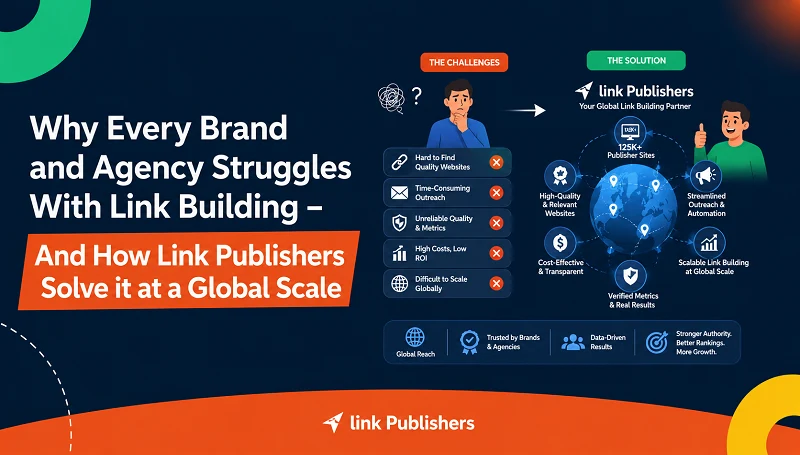
Why Every Brand and Agency Struggles With Link Building - And How Li...
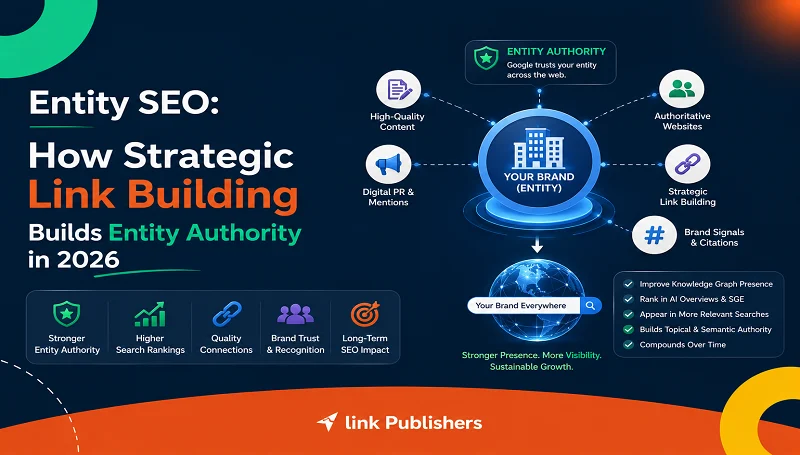
Entity SEO: How Strategic Link Building Builds Entity Authority in 2...