








Web 2.0 Links in 2025: Still Effective or SEO Myth?

Explore this post with:
Web 2.0 link building often gets a bad reputation in the SEO community. But are these types of links still worth your effort in 2025?
The short answer: Yes, but only if you use them strategically.
While Web 2.0 links might not be the strongest SEO signals on their own, they can still play a valuable role if you’re just starting out or operating on a tight budget.
In this guide, you’ll learn exactly what Web 2.0 links are, how effective they remain today, and when they can genuinely help your site grow. Consider this your simple yet practical roadmap for using Web 2.0 link building safely and effectively without wasting time or risking Google penalties.
What Are Web 2.0 Links?
Web 2.0 links are backlinks created from websites that allow you to publish your own content for free. This approach is commonly known as Web 2.0 link building.
The best part? You have complete control over the entire process:
- What content you publish
- Where the link points
- How the link appears (anchor text, context, or call-to-action)
Unlike guest posting or editorial backlinks, Web 2.0 links don’t require anyone else’s approval. You’re in charge—from creating the content to placing the link exactly how you want it.
For example:
Imagine you publish a blog post about fitness tips on a free blogging platform like Medium. Within that post, you insert a link pointing back to your paid fitness coaching website. This link is a Web 2.0 backlink.
It’s a simple, cost-effective, and fully controllable way to build backlinks to your site.
What Are Web 2.0 Sites?
Web 2.0 sites are platforms that let users create and share their own content online. They are called “Web 2.0” because they marked a shift from the old internet (Web 1.0) – where only website owners could publish content. In Web 2.0, anyone can – sign up + write a post + share information.
These websites support user-generated content like –
- Blogs
- Articles
- Videos
- Pages
Unlike traditional sites – you don’t need coding skills or permission to post. You control the content and the links.
How to identify a Web 2.0 site?
If a website allows you to create a free account and publish your own content under a personal subdomain (like yoursite.wordpress.com), it is a Web 2.0 platform.
Best Web 2.0 sites used for link building:
- WordPress.com
- Blogger.com
- Quora.com
- Tumblr.com
- Medium.com
- Wix.com
- Weebly.com
- Google Sites
- Webnode
- Jimdo
- LiveJournal
These platforms are often used in Web 2.0 link building strategies to create free backlinks and diversify your backlink profile.
Types of Web 2.0 Sites
Not all Web 2.0 sites are the same. Some let you write full blog posts, others focus on sharing media or short updates. In Web 2.0 link building – different platforms offer different ways to add backlinks. Here are the main types –
- Blogging platforms – Sites like WordPress or Blogger let you publish long-form articles with links.
- Website builders – Platforms like Wix or Weebly allow you to build a basic website on a subdomain.
- Content sharing sites – Slideshare, Scribd, and similar sites let you upload PDFs + slides + documents with links inside.
- Social micro-blogging sites – Tumblr and similar platforms support short posts, images, and contextual backlinks.
- Wiki and collaboration sites – Tools like Wikidot let you build info-based pages that can include outbound links.
Each one works a little differently – but all of them help you build backlinks with Web 2.0 effectively.
What Is Web 2.0 Link Building?
Web 2.0 link building is the process of creating backlinks by publishing content on Web 2.0 sites. These links are usually used to support your main SEO strategy.
The goal is to build a natural-looking backlink profile by linking from different platforms that you control. When done right – it can add variety and depth to your link building efforts.
Example of Web 2.0 link building:
You write a how-to guide on your free blog at Wix and include a link to a product page on your main website. That backlink becomes part of your Web 2.0 link building strategy.
Are Web 2.0 Backlinks Still Effective?
Yes. Web 2.0 backlinks still work. But only when you use them the right way. They should support your main links, not replace them.
They are not high-authority links – but they still have value when added as part of a mixed strategy.
Here is why –
Most Web 2.0 backlinks are either nofollow or UGC (User Generated Content). That means they don’t always pass strong link juice – especially if they stand alone.
But Google doesn’t completely ignore them.
A natural backlink profile includes different types of links – some strong + some weaker. That variety helps your site look more trustworthy to search engines. It also mimics the link profile of authority sites.
John Mueller, Google’s Webmaster Trends Analyst, has said that some Web 2.0 links are “spammy” – especially when they are overused or created on poor-quality sites. But he hasn’t directly called Web 2.0 link building spam. The problem is not the method – it is how people abuse it.
Web 2.0 link building can still support your SEO if –
- You use real content that provides value
- You don’t rely only on them
- You space out link placement naturally
They are also useful for helping Google index new pages. If you publish a new blog post and link to it from your Web 2.0 content – it can get crawled faster.
And when used in tiered link building – Web 2.0 links help boost other backlinks. Even if nofollow, they can send traffic to the pages that link to you, giving those links more power.
Plus, if your Web 2.0 post is genuinely helpful, people may find it and click through. That is referral traffic – which adds extra value.
What no longer works in Web 2.0 link building?
- Spinning or copying content across dozens of Web 2.0 sites
- Using auto-posting tools
- Building hundreds of links in one go
These spammy tactics are exactly what Google flags. Thanks to Google Algorithm updates like Penguin, poor Web 2.0 techniques can now hurt your SEO.
Pros and Cons of Web 2.0 Link Building
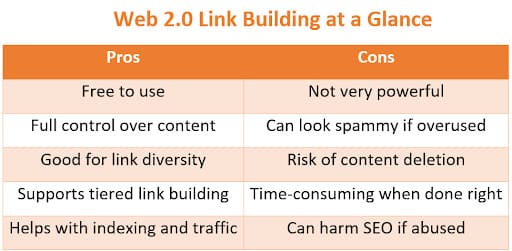
Web 2.0 techniques can be useful when done right – but it is not without risks. Before using it in your SEO strategy – it is important to understand what you gain and what you risk.
Pros of Web 2.0 Link Building
These are the benefits that make Web 2.0 link building worth considering – especially for beginners or low-budget campaigns.
Free to use
Most Web 2.0 sites are free. You don’t need to pay for publishing or backlinks. This makes it a good starting point for small websites or new SEO campaigns.
You control the content
Unlike guest posting, you don’t have to wait for approvals. You write your own content, publish it when you want, and place links exactly where they fit best.
Great for content variety
You can post blogs, tutorials, videos, or infographics. This helps create a more natural-looking backlink profile with mixed content formats.
Supports tiered link building
Web 2.0 links are often used to power up other backlinks, such as guest posts or niche edits. They work well in a tiered link building setup where each layer supports the next.
Helps with indexing
New content on your site may take time to get indexed. Linking to it from active Web 2.0 sites can help search engines find and crawl your pages faster. This can indirectly improve your domain authority over time.
Can drive referral traffic
If your Web 2.0 content is useful, it can show up in search or get shared. This may bring real visitors to your site, not just SEO value.
Cons of Web 2.0 Link Building
Now let’s look at the downsides. These are the reasons some SEOs avoid Web 2.0 link building or use them with caution.
Not very powerful
Most Web 2.0 backlinks are nofollow or UGC. They don’t pass much link juice and won’t improve SEO rankings by themselves.
Often seen as low quality
Google targets spammy backlinks and patterns. If your Web 2.0 content is thin or copied, it may get flagged or simply ignored.
Easily overused
If you build too many Web 2.0 backlinks too quickly, it can look unnatural. Search engines may see this as a link scheme and devalue your efforts.
Time-consuming when done right
Posting 100 low-effort blogs won’t help. To make Web 2.0s work, you need to write real content + format it well + update it sometimes. That takes effort.
Risk of platform deletion
Some Web 2.0 sites remove content or shut down inactive pages. If your links are placed on deleted blogs, they are gone, and so is your effort.
Can harm your SEO if abused
As Google’s Penguin update showed, overusing or automating Web 2.0 link building can backfire. If you rely on it too much, it can hurt your site reputation and rankings.
How to Use Web 2.0 Link Building the Right Way (SEO Best Practices and Tips)
According to a 2025 industry survey, 78.8% of SEO professionals believe nofollow links still impact rankings. That means links like Web 2.0 backlinks – though not the strongest – still play a role in SEO.
But let’s be clear from the start:
When using Web 2.0s for SEO, treat them as supporting links – not your primary backlink strategy.
These are best when they sit in the background – quietly helping your stronger links and your overall site structure.
Now let’s look at some SEO best practices to use them effectively.
1. Treat Web 2.0 like mini-websites
Don’t treat Web 2.0 pages like a place to dump short or copied content. Think of each one as a small site.
Create content that teaches + helps + solves a problem. It should have structure – headings, images, and useful information. Over time, you can update it and even build a small audience.
Some SEO professionals also use Web 2.0 link building as part of their content syndication strategy – republishing useful posts to get more visibility and link signals without duplicating content.
2. Balance your link types
A good backlink profile has variety. If all your links are dofollow, Google may get suspicious.
Most Web 2.0 links are nofollow or UGC, and that is okay. Keeping 5 to 20% of your total backlinks as nofollow adds balance. It shows you are not trying to manipulate SEO rankings.
Tip – Use Web 2.0s to link to inner pages, tools, or blog posts – not just your homepage.
3. Use real and varied anchor text
Anchor text is the clickable part of your link. Don’t repeat the same keyword over and over. Use branded terms, full URLs, or even phrases like “read this guide” or “learn more here.”
Natural anchors look like they were placed for readers – not search engines. That helps avoid penalties.
Example
Natural – “We covered that in this detailed SEO checklist.”
Spammy – “best free backlink sites 2025”
4. Pace your link building
Publishing too many Web 2.0 posts too fast can raise red flags.
Google may treat this as spam or a link scheme. Spread your links out over time. One post a week or every few days feels natural and safe.
This also gives you time to create better content that actually helps users and builds trust.
5. Link to new or weak pages
Web 2.0 links are great for boosting pages that don’t yet have authority. If you publish a new blog on your main site – it might take weeks to get noticed by search engines. Linking to it from a Web 2.0 site can help it get crawled and indexed faster.
6. Focus on active platforms
Use Web 2.0 sites that are still active and get real traffic. If a platform is dead or rarely indexed, the backlink won’t help much. Choose trusted names like Medium or WordPress.com.
Look for authority sites where users engage – commenting, liking, or sharing content. The more active the platform – the more chances you have of getting referral traffic and better crawling.
7. Layer your strategy (use in tiers)
This is where Web 2.0 link building really helps. You can use these backlinks in tiered link building. It is a method where links support other links. Instead of pointing them all at your main site – link to guest posts or other backlinks. This builds power for your strongest links without direct risk to your domain.
Example:
Web 2.0 🡪 Guest Post 🡪 Your Website
This keeps your main site safe and spreads authority naturally.
8. Track and update regularly
Many people forget about their old Web 2.0 links. That is a mistake.
Keep a list of what you have built. Every few months – check that the pages are still live. Refresh the content. Fix broken links. And add new internal links if needed. It will keep your content fresh and your link profile strong.
Example
You write an article called “5 Ways to Reduce Anxiety” on Medium and include a link to your coaching service page. A week later, you publish a guest post on a trusted mental health blog and link to that same page again. The Medium post helps with indexing. The guest post adds more authority. Together, they build a stronger SEO structure without looking spammy.
Web 2.0 link building is not your main SEO weapon.
But it works well in the background – adding balance and support to your actual link building strategy.
Pro tip:
If you want to do link building the right way, Link Publishers can help. Our platform offers proven strategies like Guest Posting, Digital PR, and more. Everything we do follows Google’s guidelines and focuses on long-term, white hat SEO. We help you build links that actually improve rankings and drive real traffic.
How to Build Web 2.0 Links Safely (Without Looking Spammy)
It is easy to create Web 2.0 for backlinks – but doing it safely and manually is what really helps your SEO. Here is a step-by-step way to do it.
1. Pick the right Web 2.0 platform
Choose a trusted + active site that allows you to create content and add links. Some good options include –
- WordPress.com
- Medium
- Blogger
- Wix
- Weebly
- Google Sites
Look for platforms that are indexed often and have real user activity.
2. Create an account and set up your profile
Sign up and set up your profile or blog. Choose a name that fits your niche. Add a logo or image + write a short description + make it look like a real site.
3. Write high-quality content
This is the most important step. Don’t write just to insert links. Write blog posts that are helpful and relevant to your topic.
Use proper headings and formatting. Aim for 500 to 1000+ words.
4. Add your link naturally
Include 1 or 2 links back to your main site. Place them naturally in the content. Use anchor text that fits the context.
Example – If you are linking to a blog post on SEO tips, use something like this – “Check out this guide on SEO basics for beginners.”
5. Publish and share
Once your content is live, share it. Post it on your social media, link to it from your other platforms, or submit it to indexing tools to help search engines find it faster.
6. Update over time
Revisit your Web 2.0 properties every few months. Add new posts, fix broken links, or refresh outdated info. Keeping them active makes them more valuable.
Pro tip – Don’t build 20 Web 2.0 links in one week. Start slow and focus on 1 or 2 high-quality ones. Also, avoid creating or using blog networks.
Best Platforms for Web 2.0 Link Building
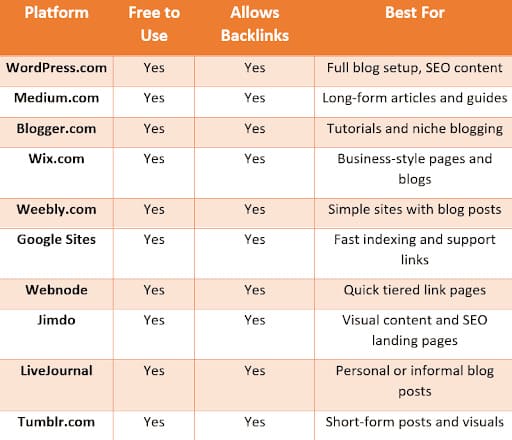
If you want to do Web 2.0 link building right – choosing the right platform is the first step. You need sites that are easy to use and indexed regularly by Google. These platforms should also allow you to add links within your content.
Here are some of the most popular platforms to create the best free Web 2.0 sites for backlink building.
- WordPress.com – One of the most popular blogging platforms. It is free and SEO-friendly.
- Medium.com – Great for writing long-form content. Easy to set up and trusted by Google.
- Blogger.com – Google-owned, simple to use, and still effective for basic blog posts.
- Wix.com – A drag-and-drop website builder that lets you create a full site with internal pages and blog posts.
- Weebly.com – Similar to Wix. Good for building basic sites and adding context-based backlinks.
- Webnode – A lesser-known platform, but it offers quick setup and supports link placement.
- Jimdo – Another free builder that lets you create pages with backlinks to your main site.
- LiveJournal.com – Has been around for years and still gets crawled regularly. Works well for casual content.
- Tumblr.com – Good for short blog-style posts and visual content. You can embed links in both text and captions.
These platforms are often used to create free Web 2.0 backlink sites.
Tip – Start with 2 to 3 of these platforms and focus on creating helpful content. It is better to have a few well-built Web 2.0 sites than dozens of low-quality ones.
Looking for high DA Web 2.0 sites list? Use our AI-powered link building platform to find the best Web 2.0 sites.
Web 2.0 Tiered Link Building Strategy Explained
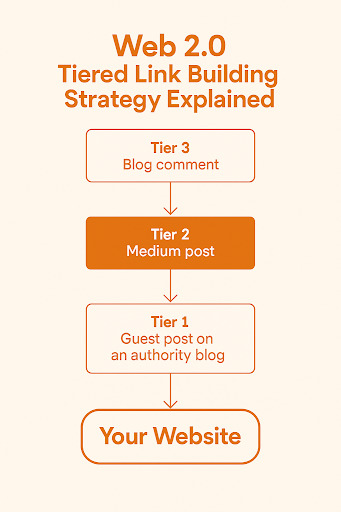
Tiered link building is a strategy where backlinks are built in layers. Instead of pointing all links directly to your main website – you create supporting links that point to each other. This helps boost the strength of your best backlinks without risking your main site.
Web 2.0 links work best as Tier 2 or Tier 3 links, not as Tier 1. That means they should support your high-quality links like guest posts + press mentions + niche edits – not link directly to your homepage or key landing pages.
How it works?
Tier 1: Your strongest backlinks. These point directly to your website. They might come from guest posting services, digital PR, or high-authority blogs.
Tier 2: This is where Web 2.0 links come in. These backlinks point to your Tier 1 links. They pass link juice and help strengthen those pages.
Tier 3 (optional): These are links that support your Web 2.0 pages. They can come from social shares or even more Web 2.0s.
Each layer boosts the next one. This setup looks more natural and still improves your overall SEO performance.
Why use Web 2.0 link building in tiers?
- Helps your best links rank higher
- Protects your main site from low-quality links
- Builds a strong, diverse backlink profile
- Improves indexing and crawling of deeper pages
Common Mistakes to Avoid with Web 2.0 Backlinks
Even though Web 2.0 link building is simple, small mistakes can ruin your efforts. Avoid these common issues.
- Posting thin or low-value content
- Using the same anchor text everywhere
- Linking only to your homepage
- Building too many links too fast
- Using spun or duplicate content
- Ignoring grammar and readability
- Creating backlinks on inactive platforms
- Relying only on Web 2.0s for SEO
- Forgetting to update or maintain your Web 2.0 pages
- Placing links without any context in the content
- Building backlinks through spammy blog networks
Wrapping Up
Web 2.0 link building is not a magic SEO trick but it still has value when used the right way. So yes it is worth investing in – but only as support.
Key takeaways:
- Use Web 2.0 link building to support stronger backlinks
- Always post real helpful content
- Avoid spam and low-quality platforms
- Stick to manual link building
- Use tiered linking for better results
FAQs
Yes, Web 2.0 link building can still help with SEO in 2025 when used the right way. They are good for supporting your main links, improving indexing, and adding link diversity. But they should not be your main link building method if you want strong long term results.
Yes, you should use Web 2.0s as part of your link building plan. They are free, easy to control, and can support your other SEO efforts.
Web 2.0 backlinks are not as powerful as they once were, but they still work. They are best used to support stronger backlinks like guest posts.
Most Web 2.0 links are nofollow or UGC, so they pass very little link juice.
Yes, Web 2.0s can harm your SEO if used the wrong way. Poor content overuse and spammy backlinks may lead to penalties. Avoid using automation or building too many links quickly.
Related Content:







Why Every Brand and Agency Struggles With Link Building - And How Li...
Entity SEO: How Strategic Link Building Builds Entity Authority in 2...